01 / AIoT · WSN

AIoT platform · wireless sensor networks

We connect sensors, cameras and controllers over the site network, and monitor and control them from 2D and 3D dashboards.

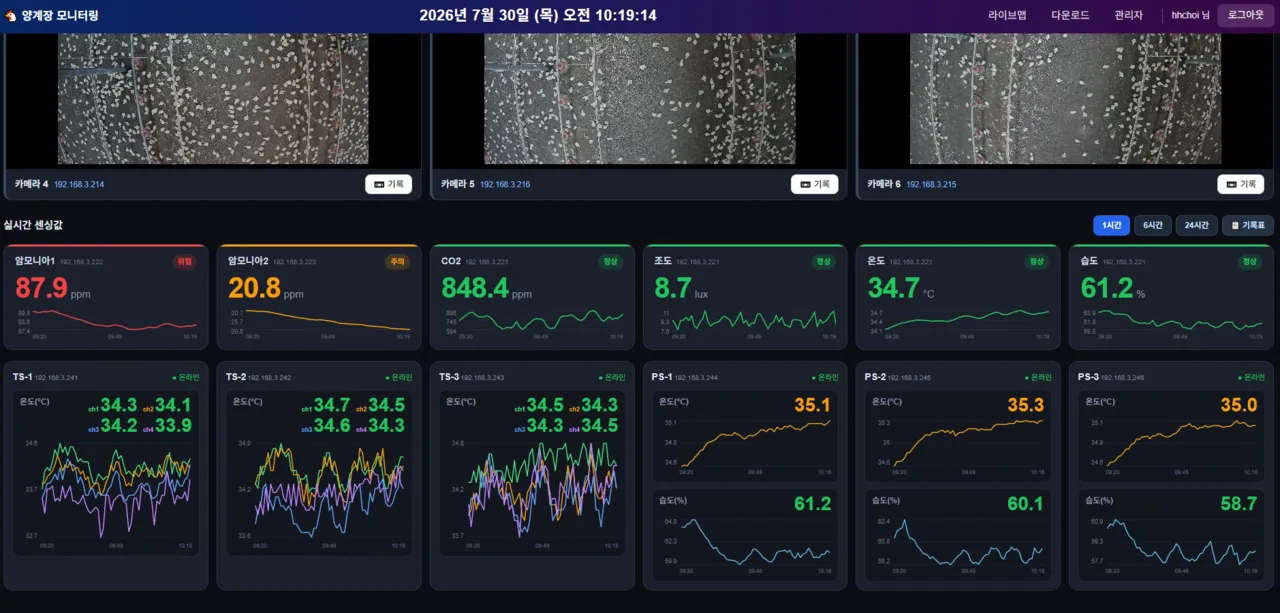
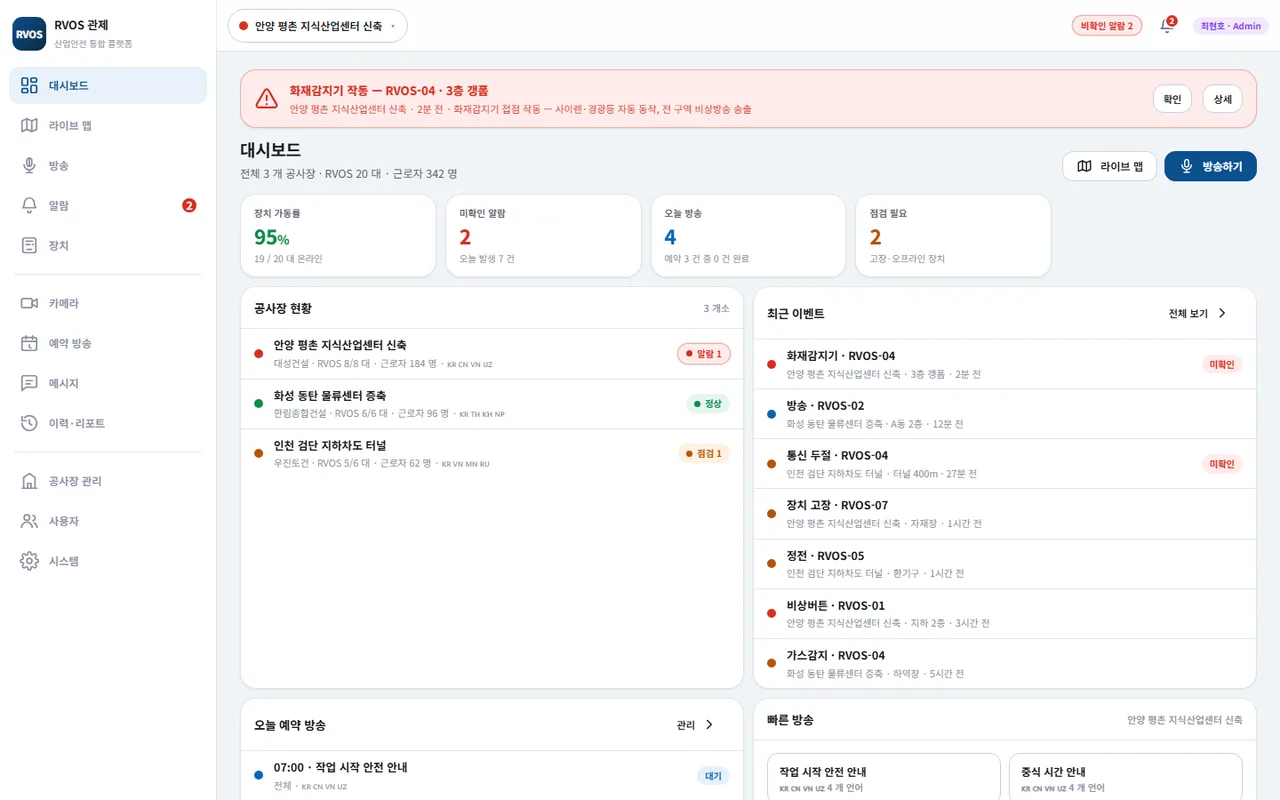
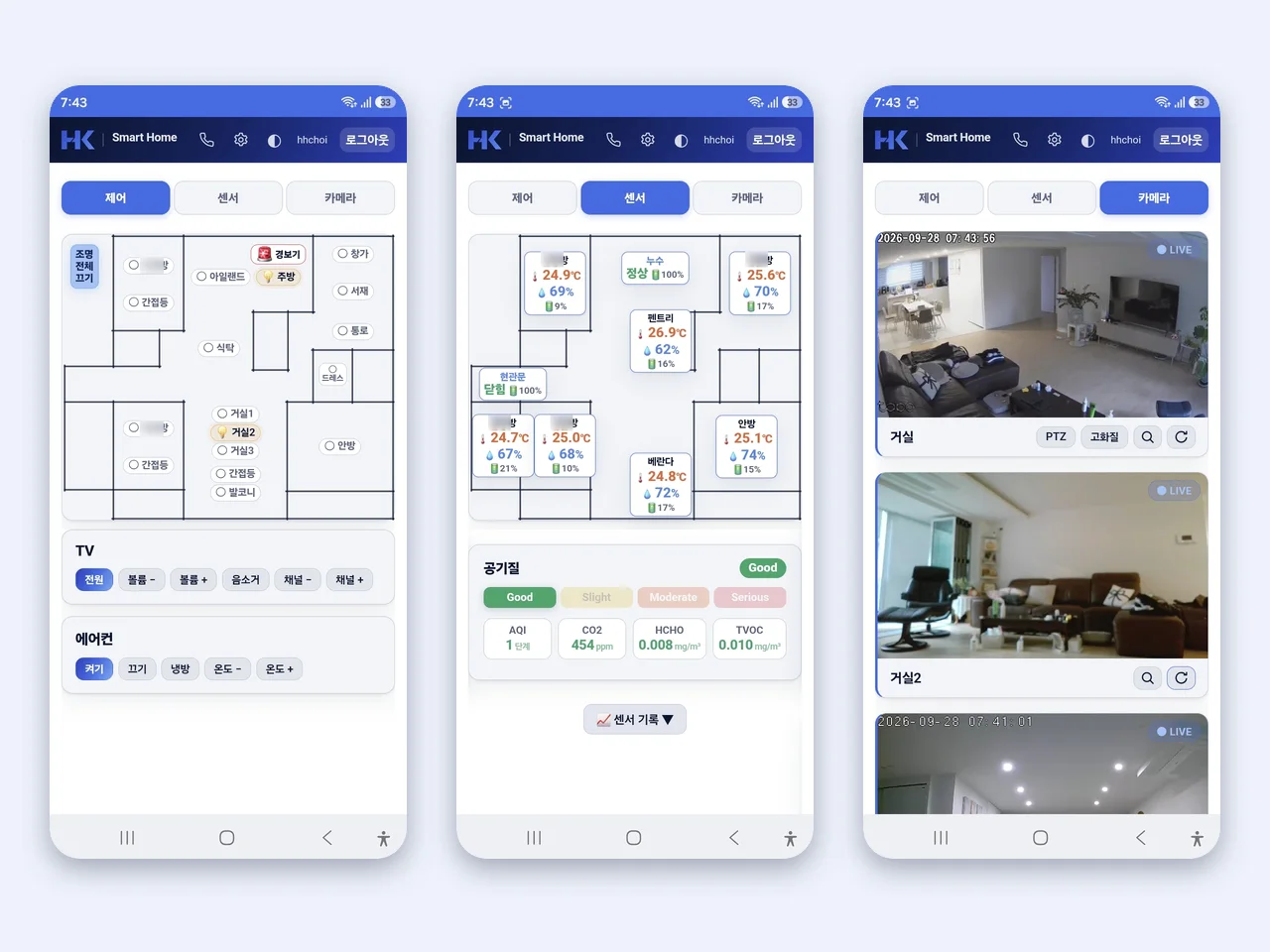
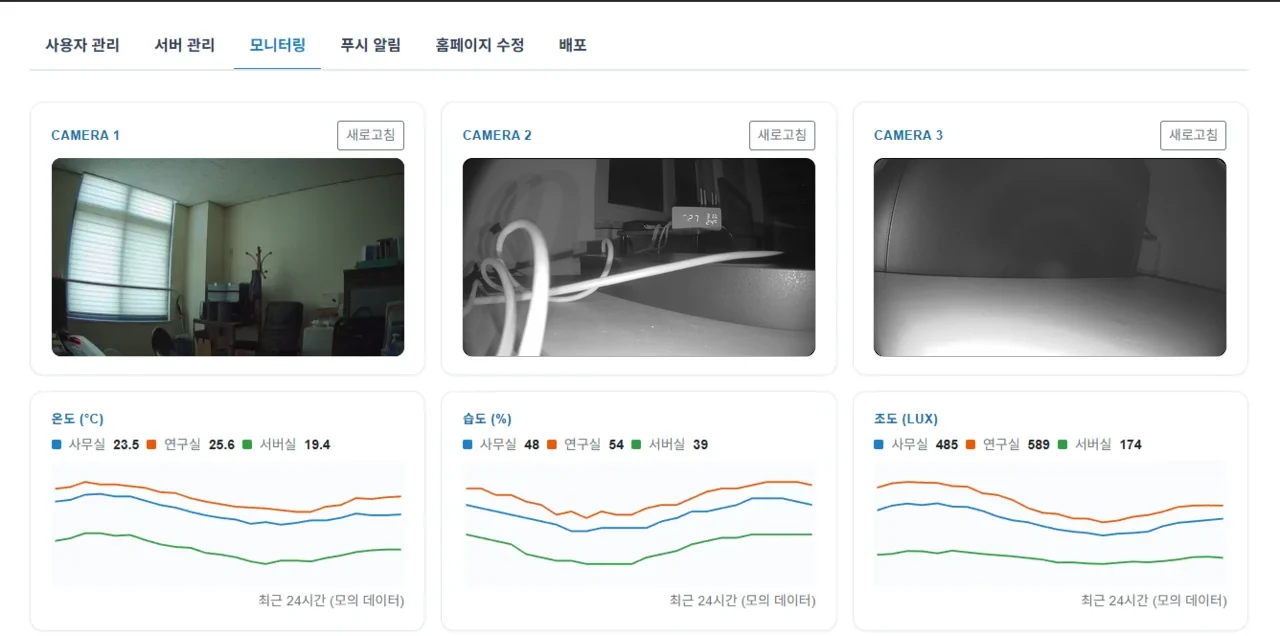
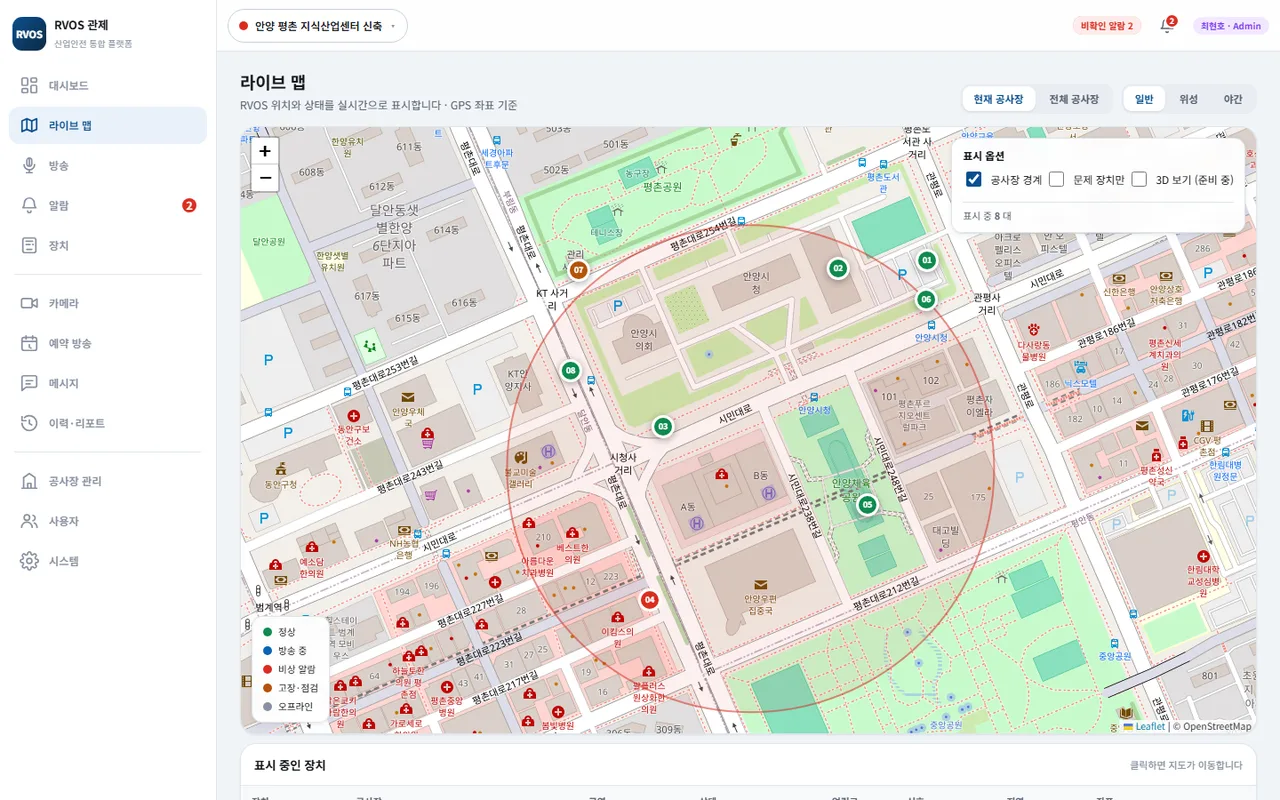
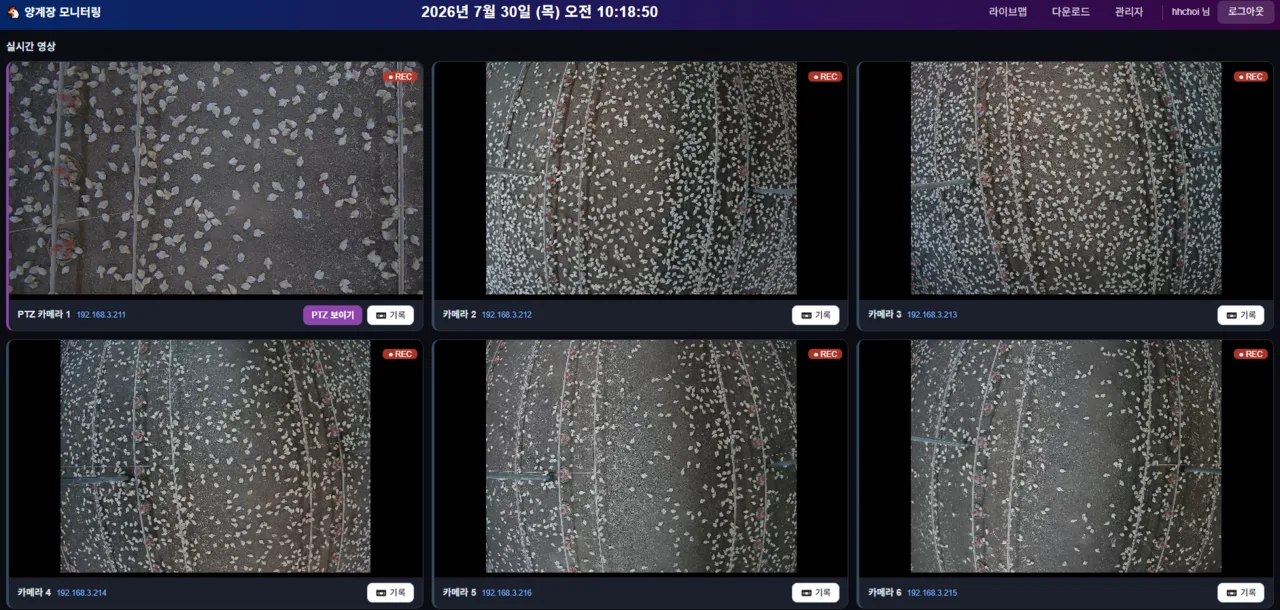
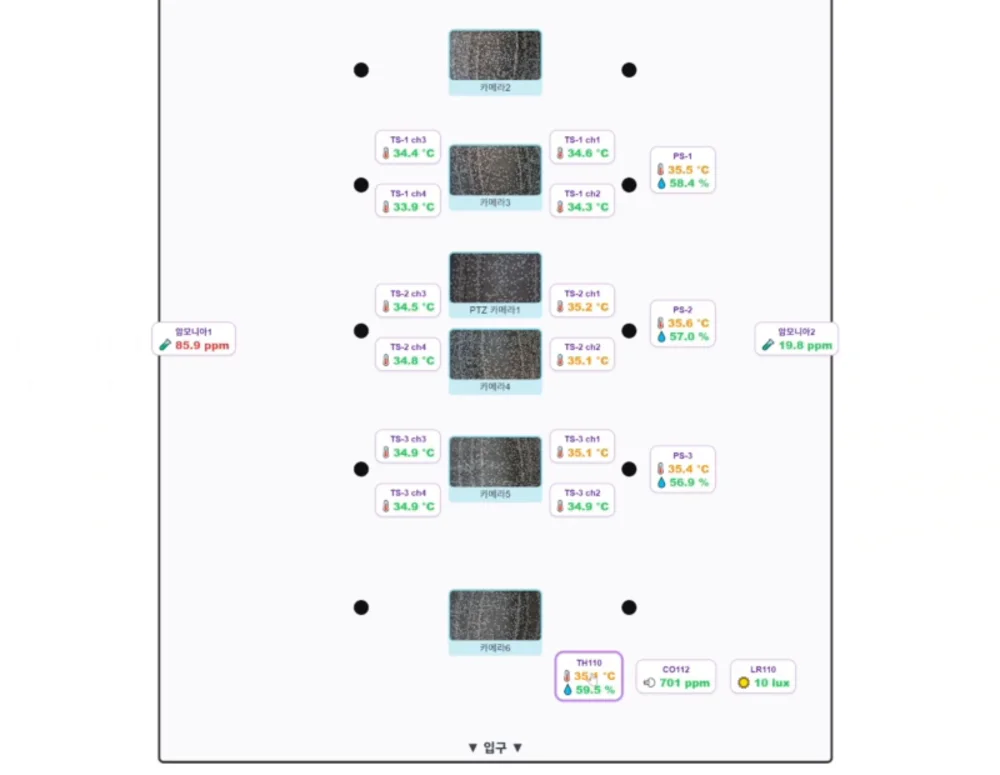
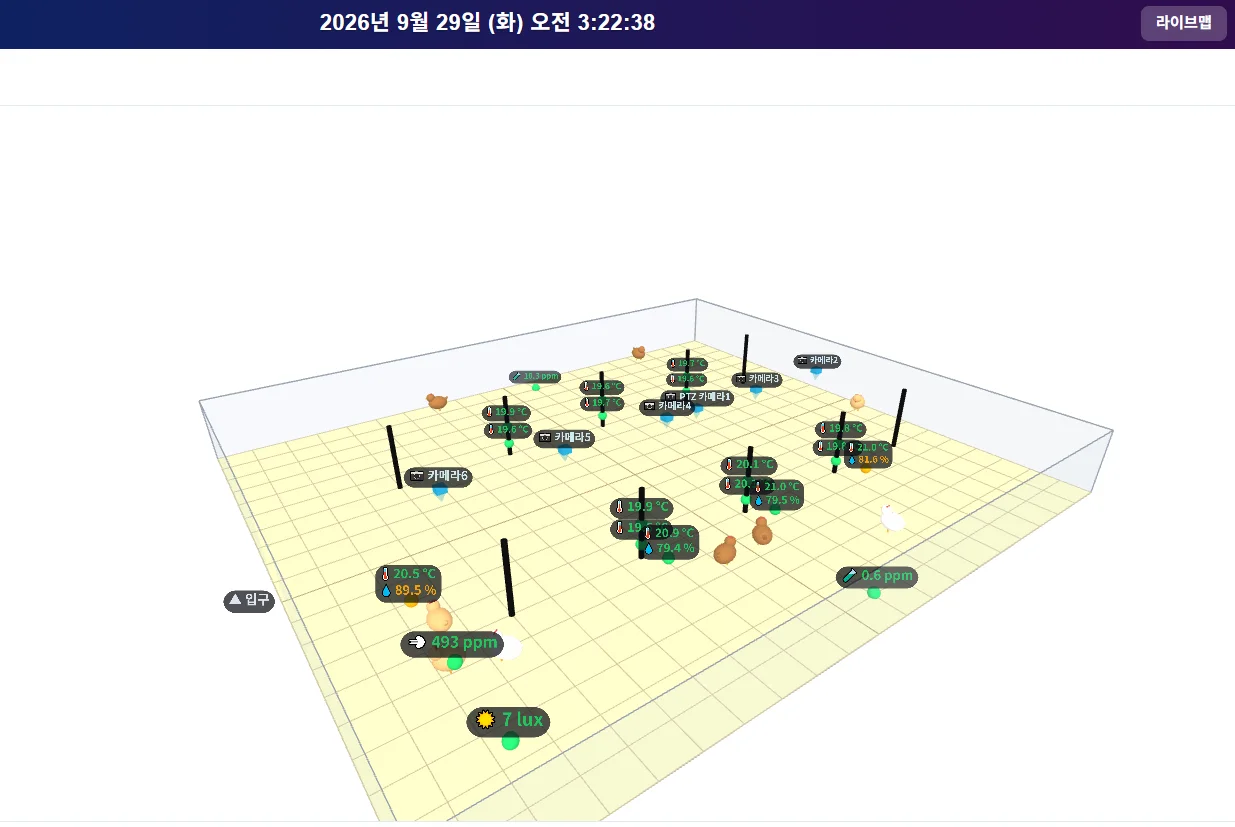
AIoT monitoring screens — construction-site map view, poultry farm sensor graphs, poultry farm 2D live map, poultry farm 3D view (1/4)
AIoT monitoring screens — construction-site map view, poultry farm sensor graphs, poultry farm 2D live map, poultry farm 3D view (2/4)
AIoT monitoring screens — construction-site map view, poultry farm sensor graphs, poultry farm 2D live map, poultry farm 3D view (3/4)
AIoT monitoring screens — construction-site map view, poultry farm sensor graphs, poultry farm 2D live map, poultry farm 3D view (4/4)
AIoT PLATFORM

Integrated monitoring · 2D/3D dashboards

Different sensors, cameras and equipment at each site are connected into one collection, storage and display system. Locations and status are visible at a glance on 2D live maps over floor plans, 3D views, and maps.

Key features
  • Sensor collection — periodic polling of Modbus TCP/RTU · RS485 · 4–20mA · wireless loggers, stored in a time-series DB
  • Video — IP camera RTSP relayed for WebRTC · HLS live streaming, 24-hour recording
  • Monitoring — floor-plan 2D live map · Three.js 3D view · map-based multi-site monitoring
  • Alarms — instant app and web push notifications when thresholds are exceeded, role-based viewing permissions
MQTTModbusInfluxDBMediaMTXWebRTCThree.jsBlazor
Patent applications
10-2026-0096389
02 / EDGE DEVICE

Edge devices · on-device AI

Models run directly on smartphones, embedded boards and smart glasses, so the site keeps working even when the network drops.

SMARTPHONE EDGE

Smartphone edge — an app that becomes an inspector

Inspection, measurement and recognition are finished on the spot with the smartphone's camera and NPU. With just a stand, it fits on any line right away.

Key features
  • Snapdragon NPU (QNN)-accelerated ONNX inference — real-time YOLO26 detection
  • Non-contact dimension measurement at ±0.15mm with Galaxy S25 Ultra 50MP/200MP capture
  • Simultaneous QR · Data Matrix · barcode · label OCR recognition, matched on the server
  • Turning spare phones into WebRTC cameras — smart home camera app
AndroidKotlinONNX RuntimeQNNCameraXML Kit
Patent applications
10-2026-008158610-2026-0082439
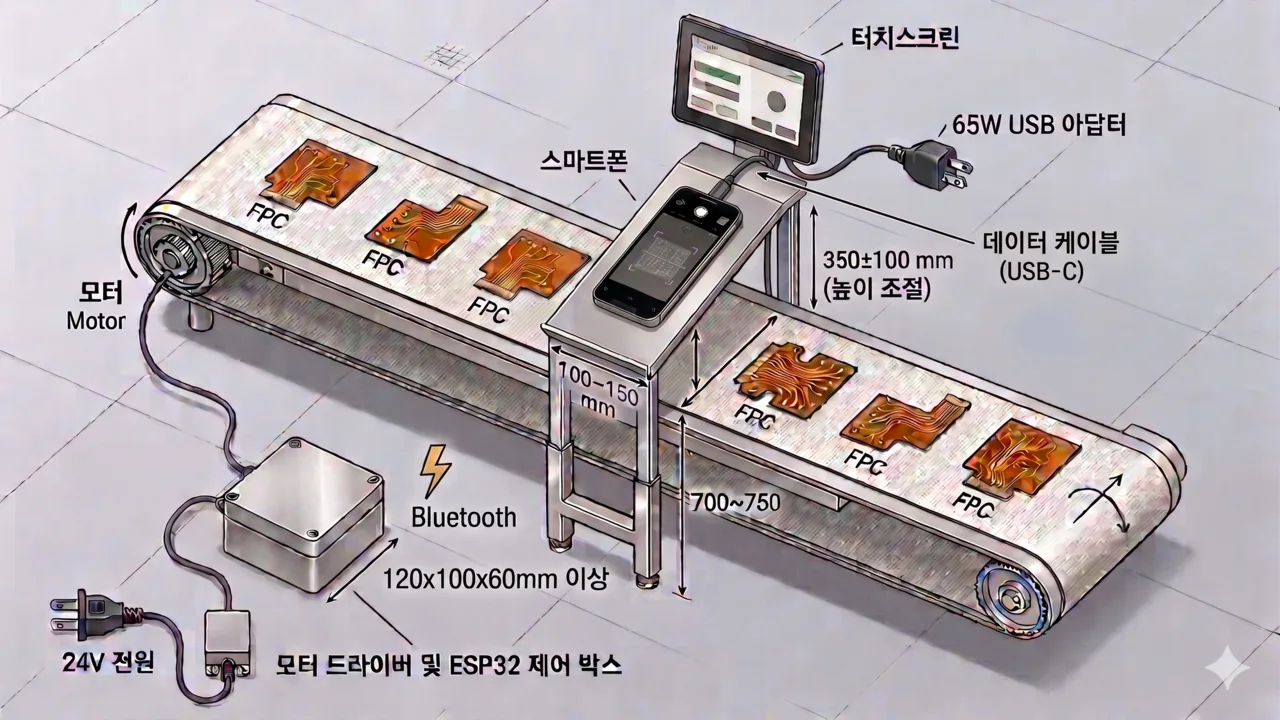
Embedded boards in use — Jetson edge inspector, RVOS device controller, smartphone · ESP32 conveyor diagram (2/4)
Embedded boards in use — Jetson edge inspector, RVOS device controller, smartphone · ESP32 conveyor diagram (3/4)
Embedded boards in use — Jetson edge inspector, RVOS device controller, smartphone · ESP32 conveyor diagram (4/4)
EMBEDDED BOARD

Embedded boards — Jetson · Raspberry Pi · ESP32

We design and build down to the board level: inspectors beside the line, on-site controllers, and conveyor drives.

Key features
  • NVIDIA Jetson Orin Nano (40 TOPS) — edge inspector · smart-home server · video relay
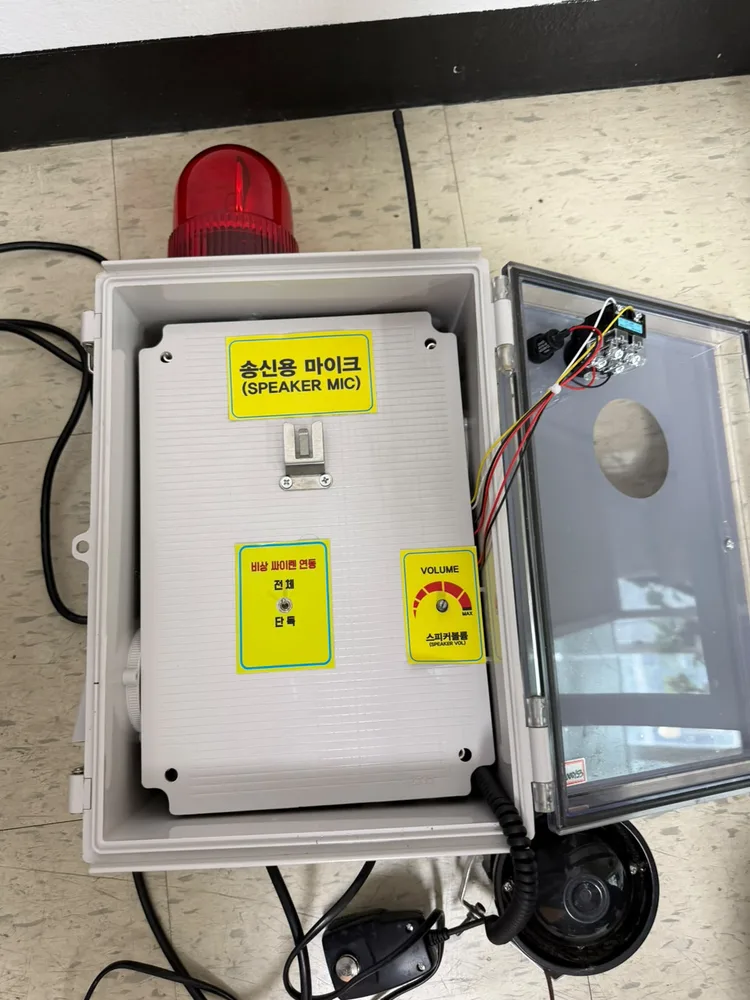
  • Raspberry Pi CM5 industrial SBC — broadcast and alarm device control, 5G/Wi-Fi failover design
  • ESP32 BLE — slows and stops the conveyor motor according to the smartphone's judgment
JetPackDockerLinuxRS485BLE
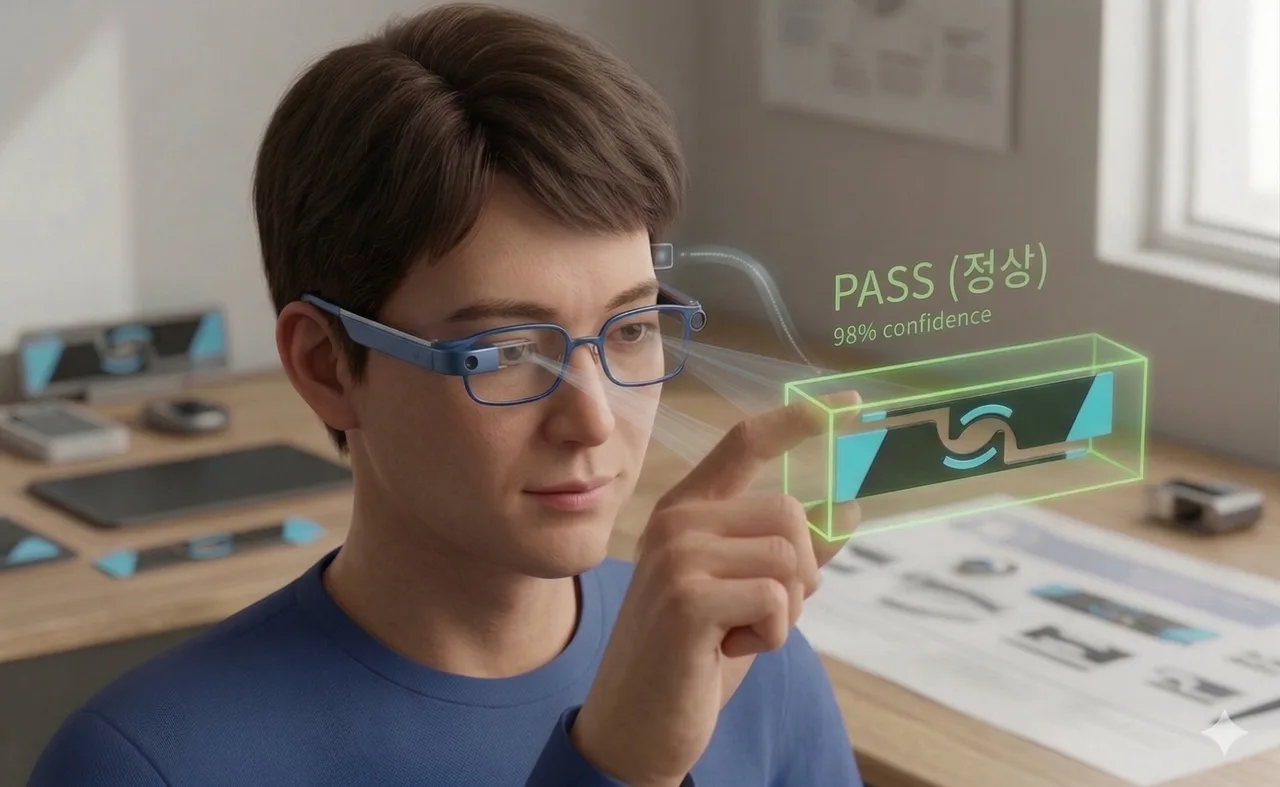
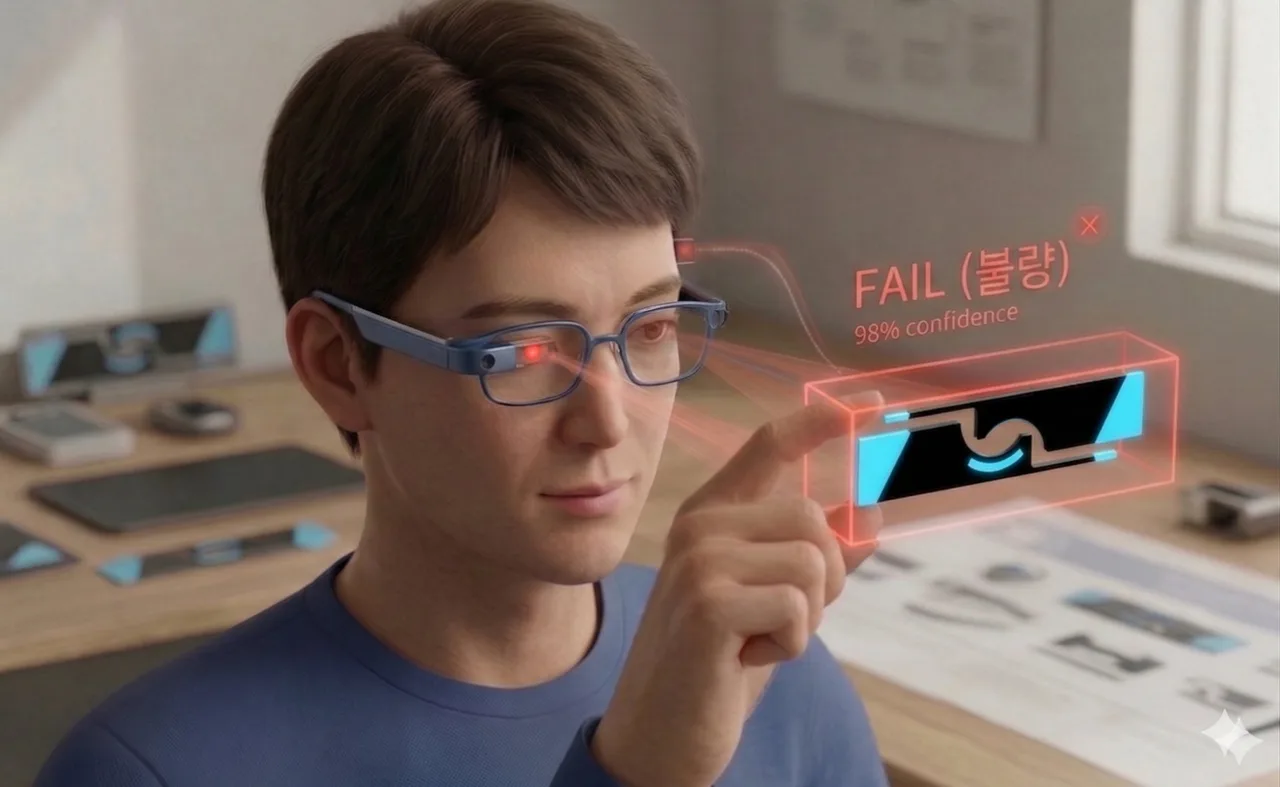
Smart glasses inspection concept — pass/fail shown on the glasses display (1/2)
Smart glasses inspection concept — pass/fail shown on the glasses display (2/2)
Concept diagram
SMART GLASSES

Smart glasses — results where you look

The glasses capture, the smartphone runs inference, and the result is overlaid on the glasses display. Both hands stay on the job.

Key features
  • YOLO26 offloading — glasses capture → phone inference → boxes returned, 24fps · 20–29ms inference
  • Standalone barcode recognition on the glasses — 11 types including QR and Data Matrix
  • Face recognition of registered people · phone camera casting, all over one transport protocol
  • 640×480 source pixels shown 1:1 on screen — box positions match without correction
RayNeo X3 ProCamera2ONNXML KitTCP/UDP
Patent applications
10-2026-009452310-2026-0094524
03 / AI MODELING

AI modeling — from data to deployment

We collect field data, label and augment it for training, then optimize the models for the edge and deploy them.

DETECTION · SEGMENTATION

Object detection · defect inspection

We train detection, segmentation, pose and classification with YOLO-family models, and cover data-scarce defects with anomaly detection and synthesis.

Key features
  • YOLO v8/v11/26 — Detection · Segmentation · Pose · Classification · OBB
  • Anomaly Detection — detecting subtle defects from normal data only
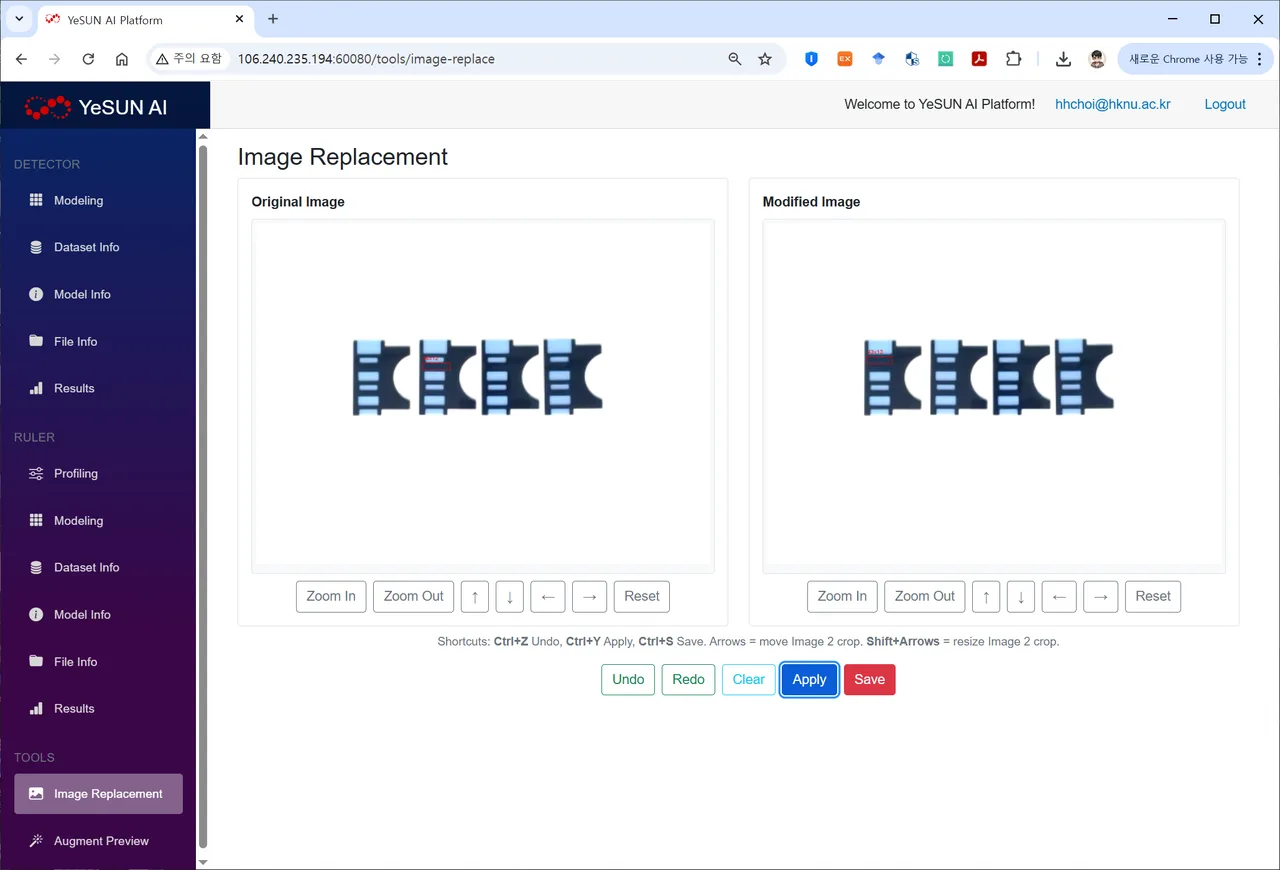
  • Image Replacement · augmentation preview — filling the gap in scarce defect data
  • Real-time inference on Jetson and smartphones via ONNX · TFLite · QNN conversion
YOLOFaster R-CNNAnomalibOpenCVPyTorch
Patent applications
10-2026-0081586
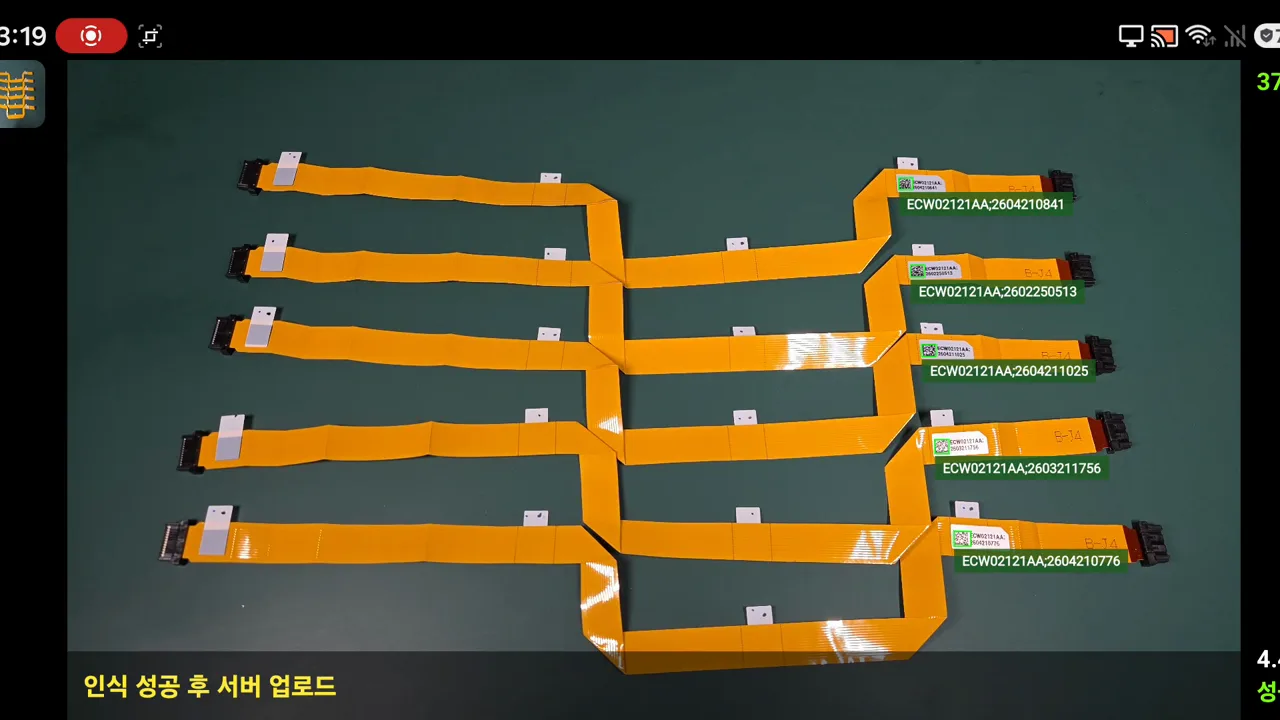
Screen reading the codes of five FPCs at once
CODE · OCR

Code · text recognition

QR codes, Data Matrix codes, barcodes and label text are read together in one frame and linked to the part history.

Key features
  • Real-time reading of 1D/2D codes such as QR · Data Matrix · Code128
  • Low-resolution label OCR with PaddleOCR (PP-OCRv5) · ML Kit, corrected with a domain dictionary
  • Part tracking by matching code + OCR results on the server
ML KitPaddleOCRONNXOpenCV
Applied projects
SAMKEE FPC Inspection
Related technology
Smart glasses
FACE · POSE

Face · pose · safety recognition

Models that recognize people and hazards are split across multiple devices to gather results quickly and lightly.

Key features
  • Real-time 3D joint reconstruction via multi-view 2D pose estimation + edge-server triangulation
  • Collaborative smart glasses · phone face recognition (registered people only)
  • Fire · smoke · fall · headcount · crowd detection — AI CCTV
YOLOv8-PoseTriangulationWebGLFace Recognition
04 / AI AGENT

AI agents — AI that answers, watches and fixes

We run agents that put LLMs and vision-language models to work: answering with citations to regulations, watching cameras, and editing websites.

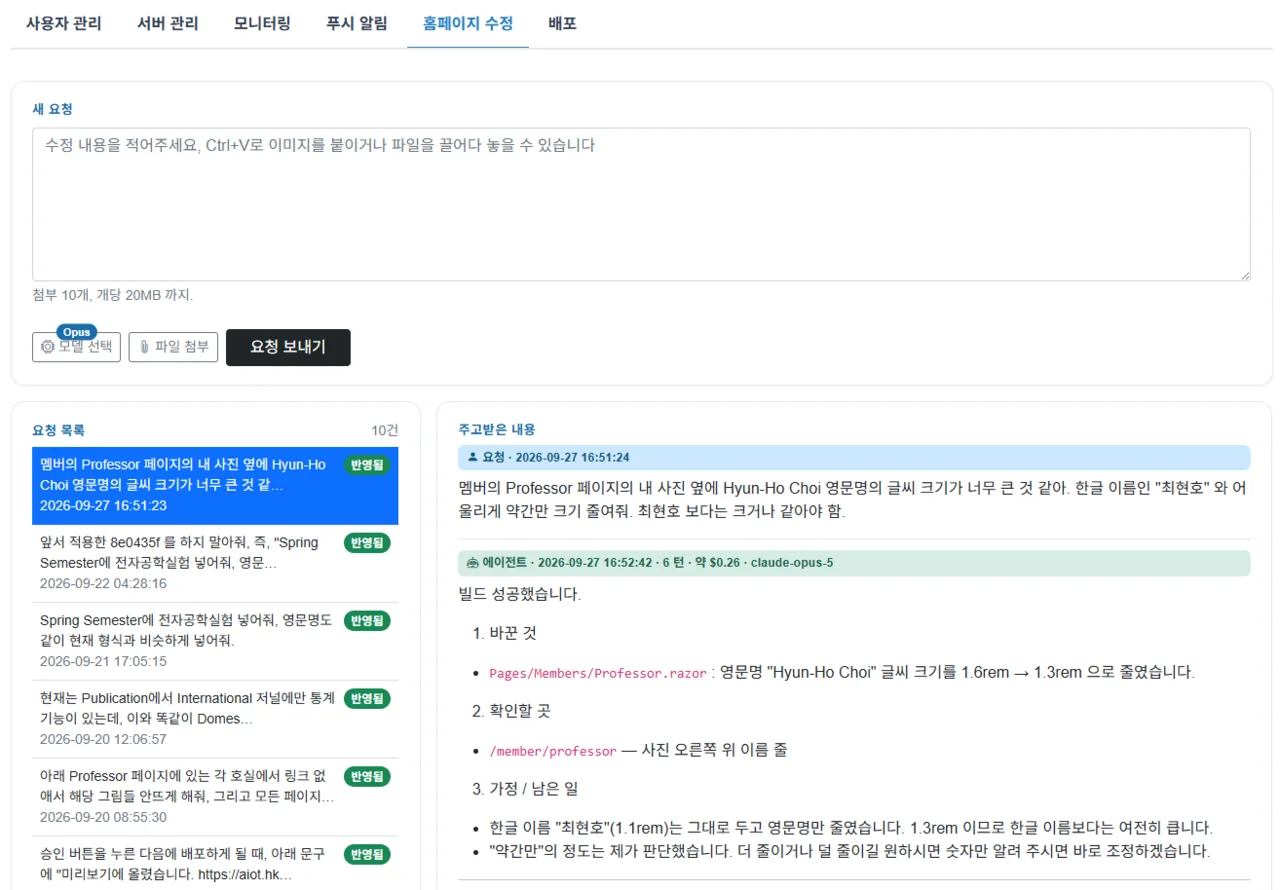
Automatic website editing — request list, agent work details, deployment history (1/3)
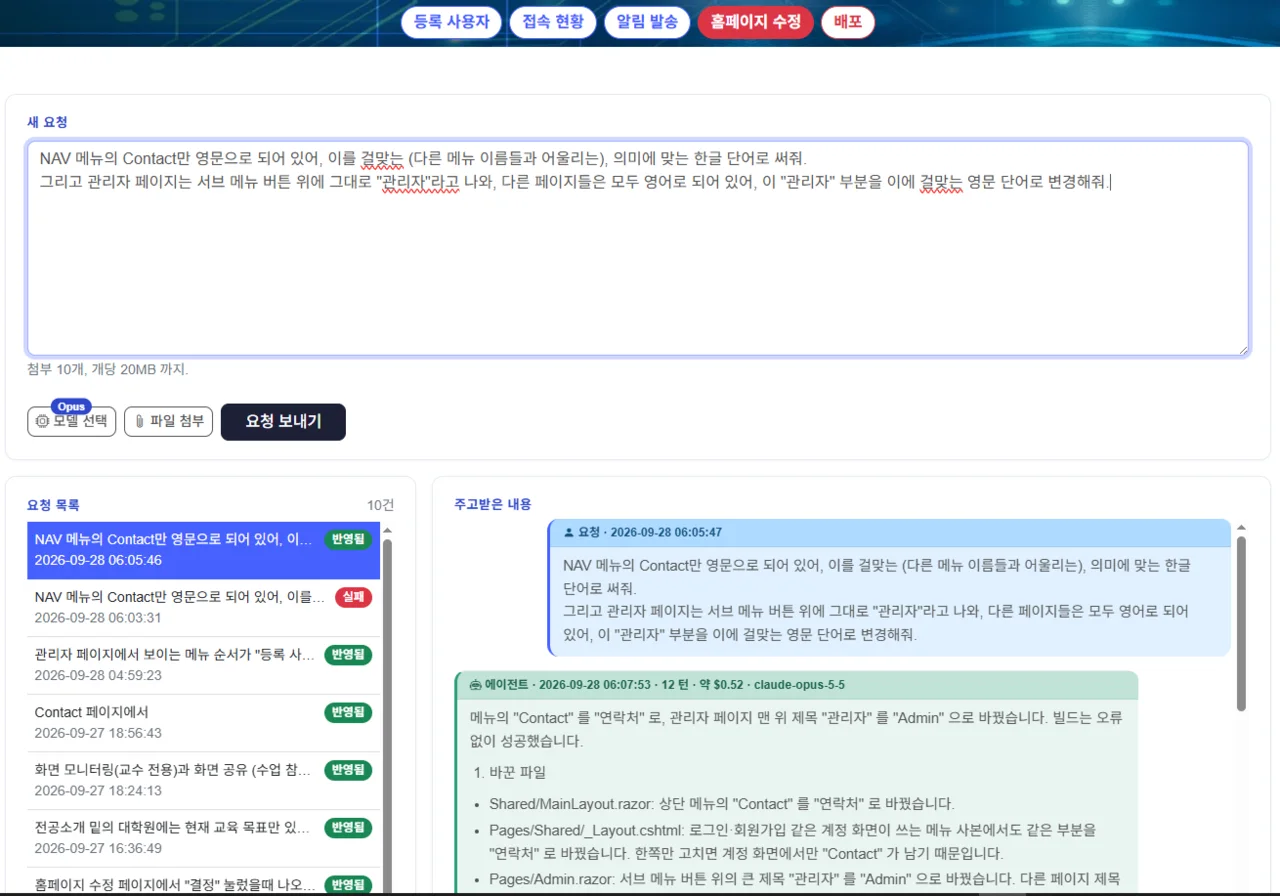
Automatic website editing — request list, agent work details, deployment history (2/3)
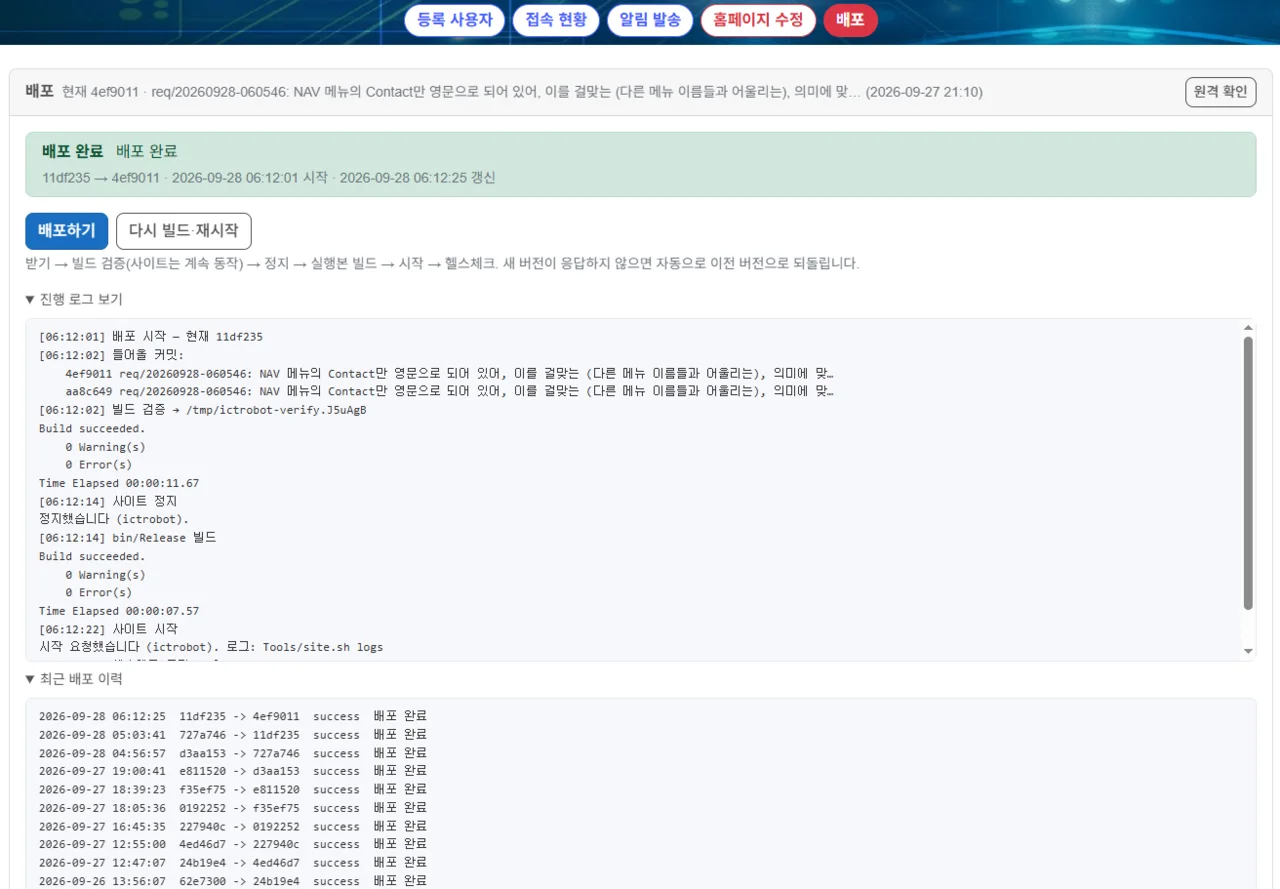
Automatic website editing — request list, agent work details, deployment history (3/3)
WEB OPS AGENT

Automatic website editing · deployment

When an admin writes "change it like this" on the screen, an AI agent makes the edit and puts it on a preview; once reviewed and approved, it is deployed to production.

Key features
  • Central agent server — an isolated container (gVisor) per job, per-site budget · usage management
  • Verification build · changed-path check; shown on a preview first and approved only after review
  • On approval: pushed to GitHub → CI image → server swap, with disconnected screens recovering automatically
  • Progress notifications via app · web push — running on 5 department, lab and company websites
AI AgentClaude CodegVisorGitHub ActionsDocker
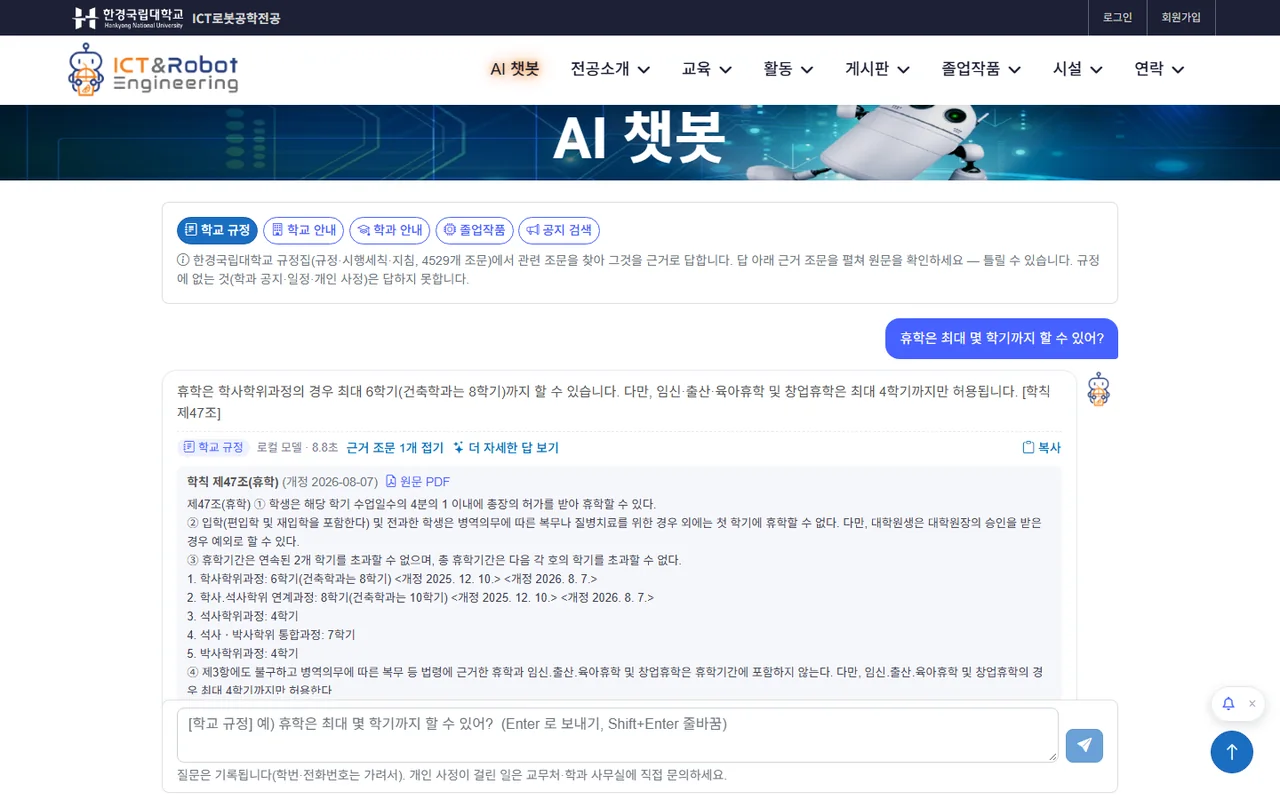
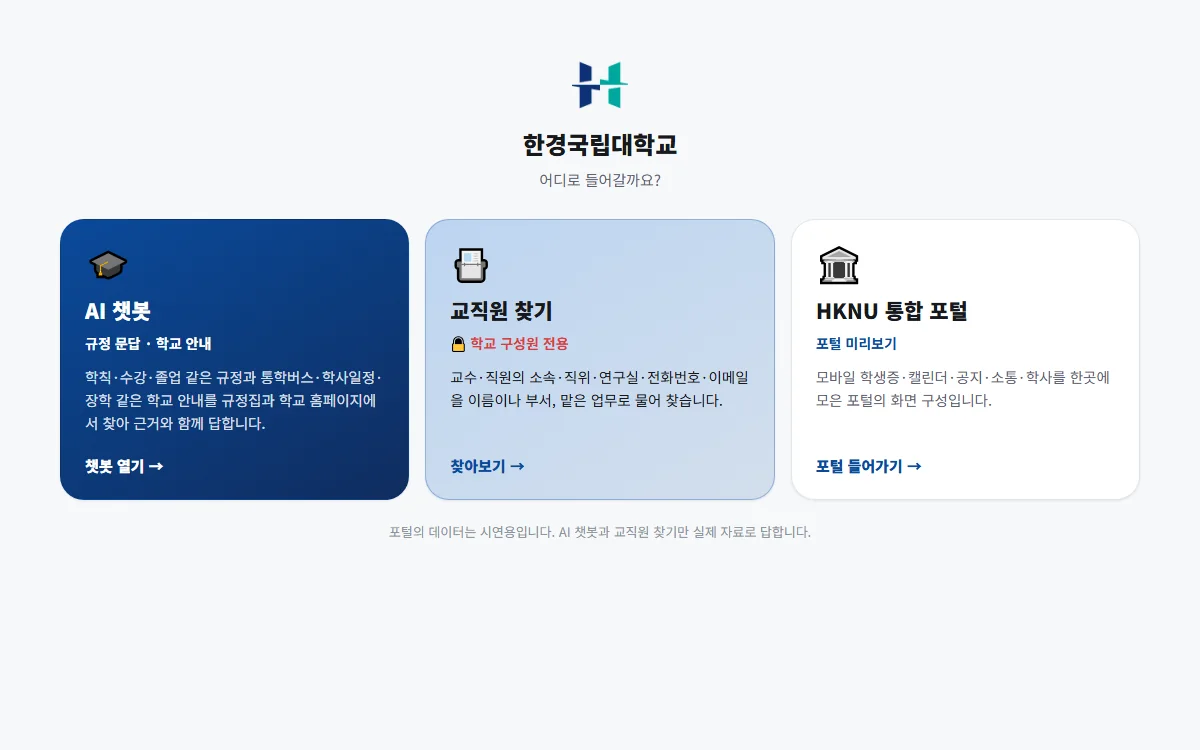
AI chatbots — the ICT Robotics Engineering chatbot's answer with cited articles, the Anyang University department chatbot, and the HKNU AI chatbot start screen (1/3)
AI chatbots — the ICT Robotics Engineering chatbot's answer with cited articles, the Anyang University department chatbot, and the HKNU AI chatbot start screen (2/3)
AI chatbots — the ICT Robotics Engineering chatbot's answer with cited articles, the Anyang University department chatbot, and the HKNU AI chatbot start screen (3/3)
RAG · LOCAL LLM + CLOUD

An AI chatbot that shows its sources

It searches the university rules, regulations, campus guides and notices and answers with the relevant articles cited. Questions go first to a local model on the university's in-house GPU server, and only when a more detailed answer is needed is a cloud model consulted.

Key features
  • 192 rulebooks · 4,529 chunks searched by keyword + vector together (BM25 · bge-m3)
  • Local LLM (Qwen3 14B) first; "more detailed answers" go to Claude — with student IDs and phone numbers masked
  • Every answer links its source articles · original PDFs · posts, showing only the material actually used
  • Regulations refreshed weekly · school websites and notices daily — running on 3 sites
RAGQwen3ClaudeBM25bge-m3FastAPI
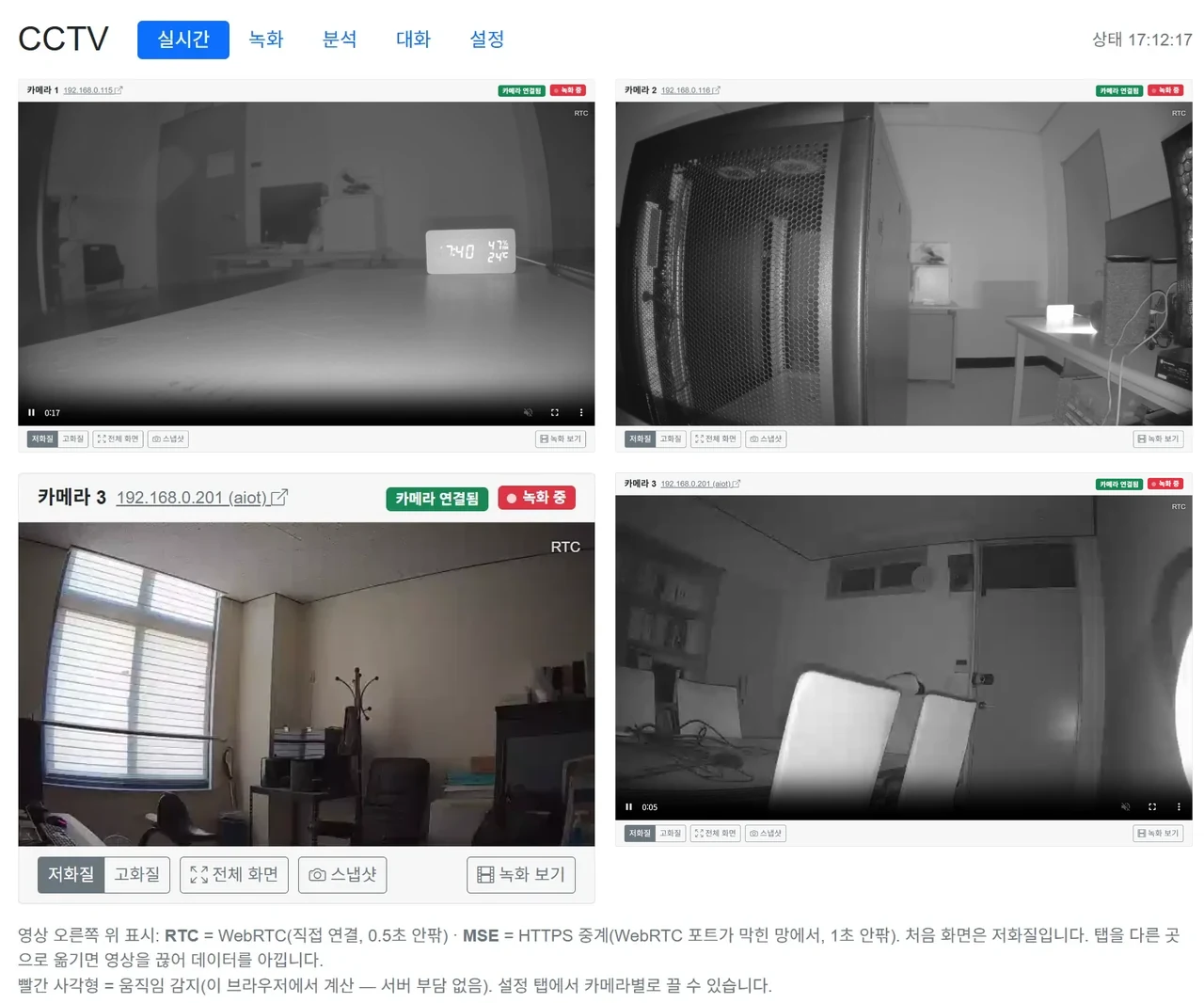
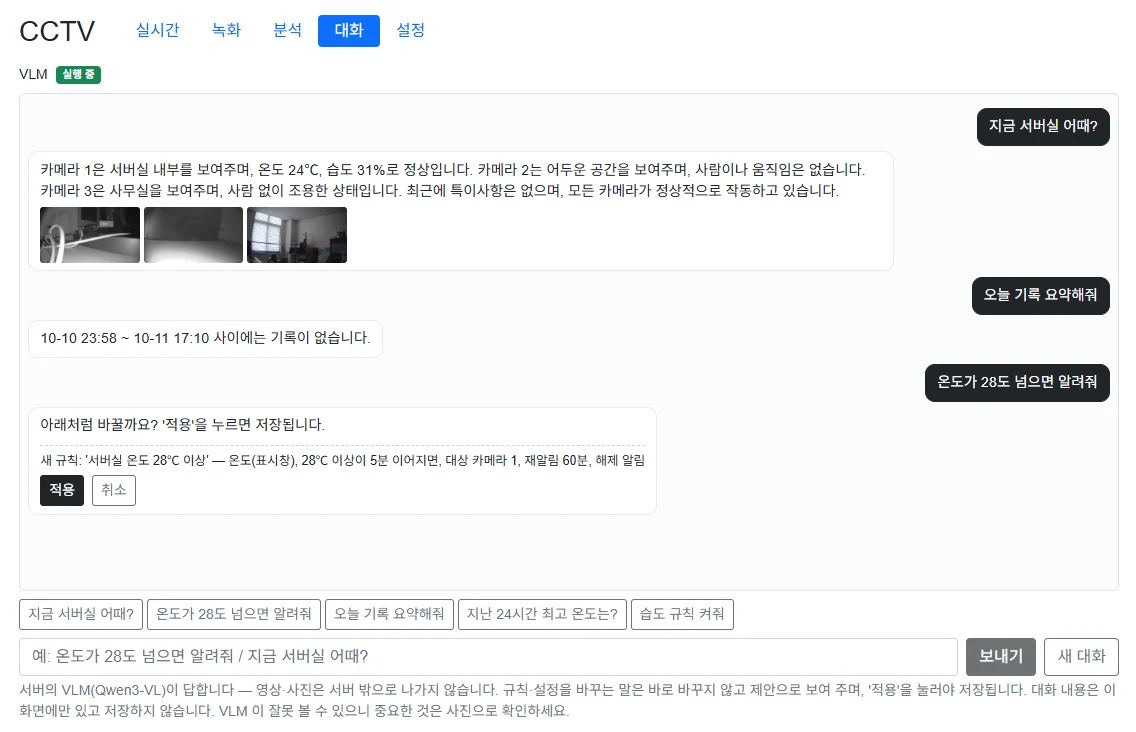
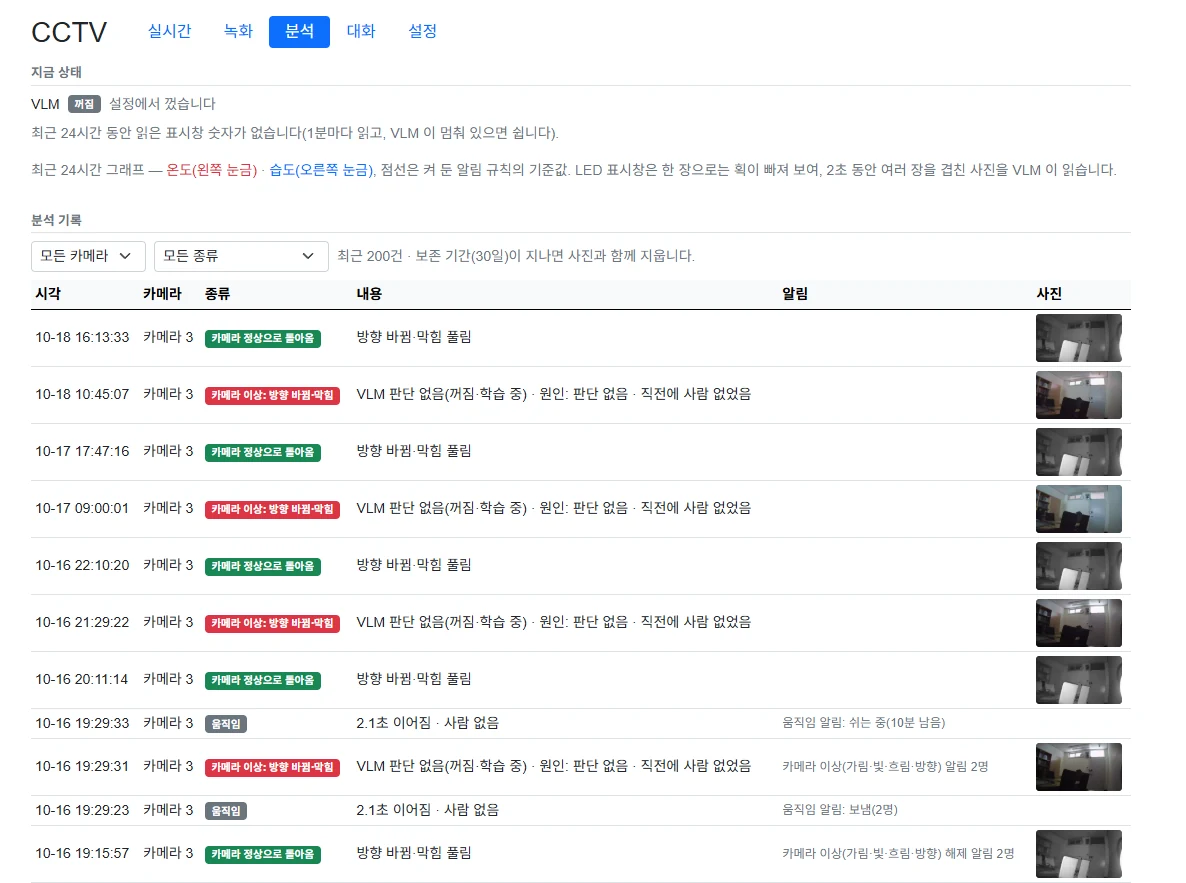
HawkAI CCTV — three live cameras, the conversational agent's answer and rule suggestion, temperature/humidity readings from a display panel with analysis log (1/3)
HawkAI CCTV — three live cameras, the conversational agent's answer and rule suggestion, temperature/humidity readings from a display panel with analysis log (2/3)
HawkAI CCTV — three live cameras, the conversational agent's answer and rule suggestion, temperature/humidity readings from a display panel with analysis log (3/3)
VLM · CCTV AGENT

CCTV vision AI agent

Watching cameras around the clock, it notices people, falls and blocked cameras, and a vision-language model describes the scene in words. Alarm rules are also created in plain words, such as "Tell me when the temperature goes above 28 degrees."

Key features
  • YOLO first filters for motion, people and fallen postures, then a vision-language model (Qwen3-VL 30B · vLLM) makes the final call
  • Lens blockage · blur · misalignment with likely causes, plus reading time · temperature · humidity from display boards
  • Conversational agent — ask about the current situation, past records and temperature/humidity statistics, and create alarm rules in plain words, then "apply"
  • App push notifications with photos; video never leaves the server — 0.3–0.8 s per frame
vLLMQwen3-VLYOLOWebRTCHK Push
05 / PLATFORM

Platform — automating training · deployment · operations

We turn the repetitive work of model training, device deployment and collaborative inference into a platform.

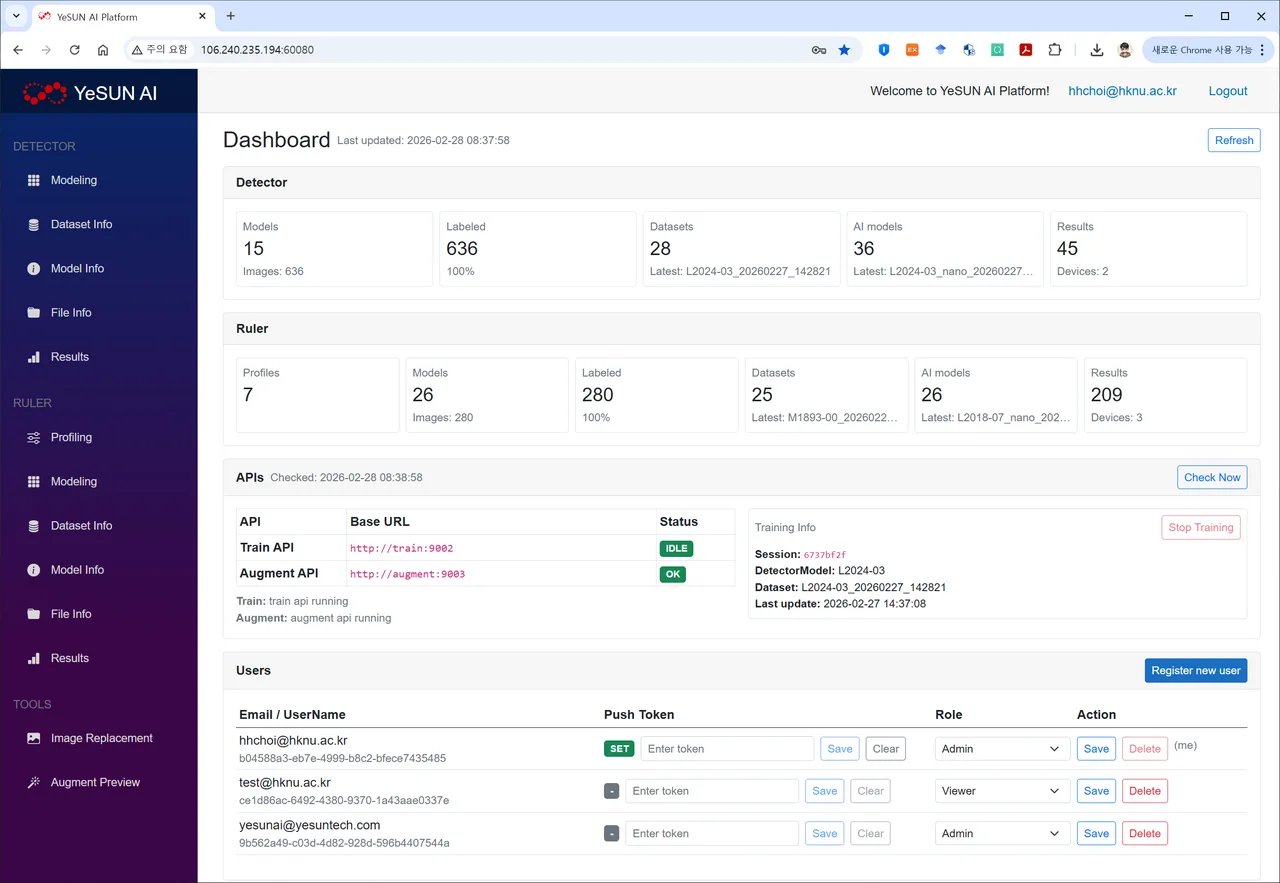
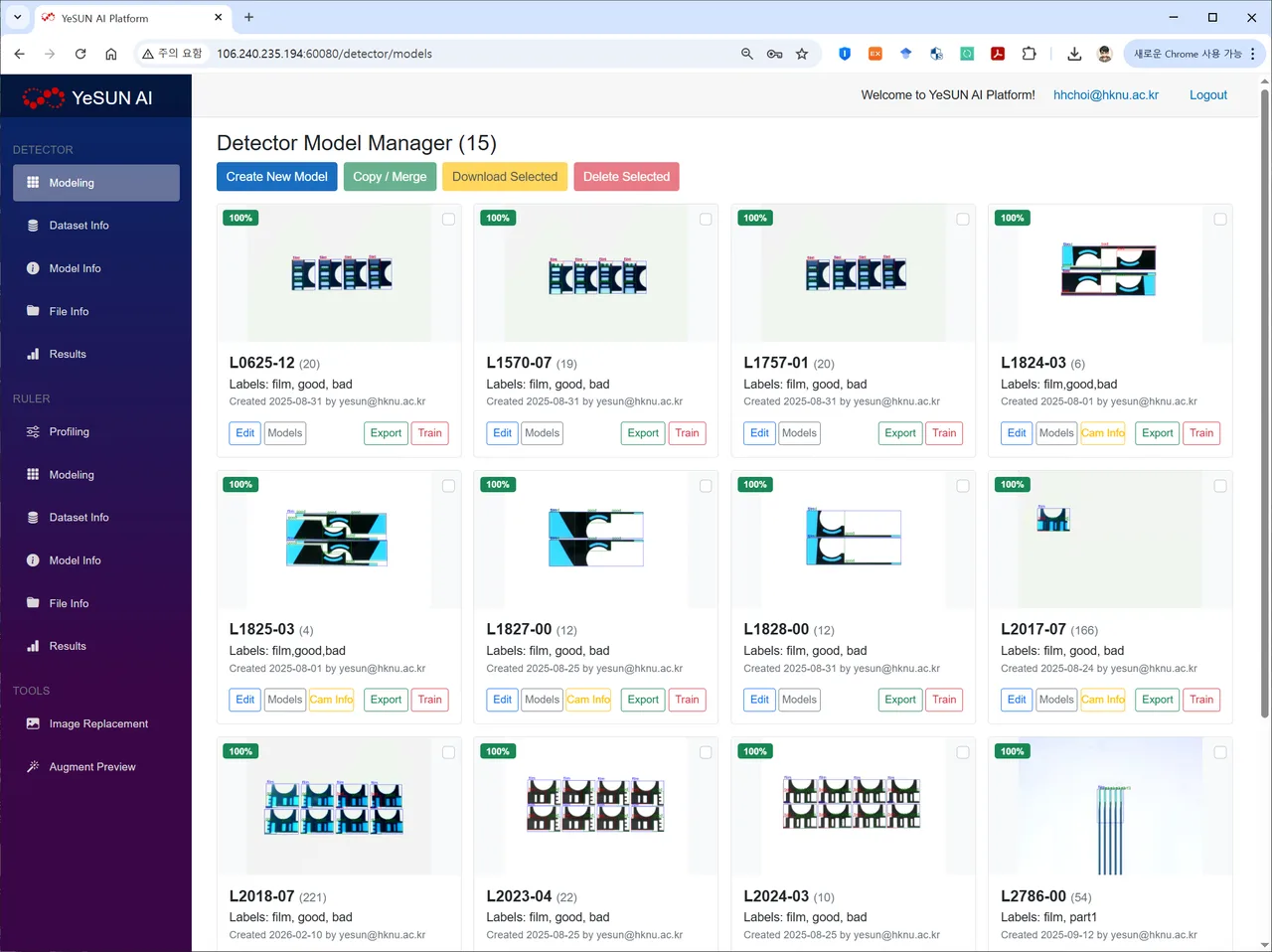
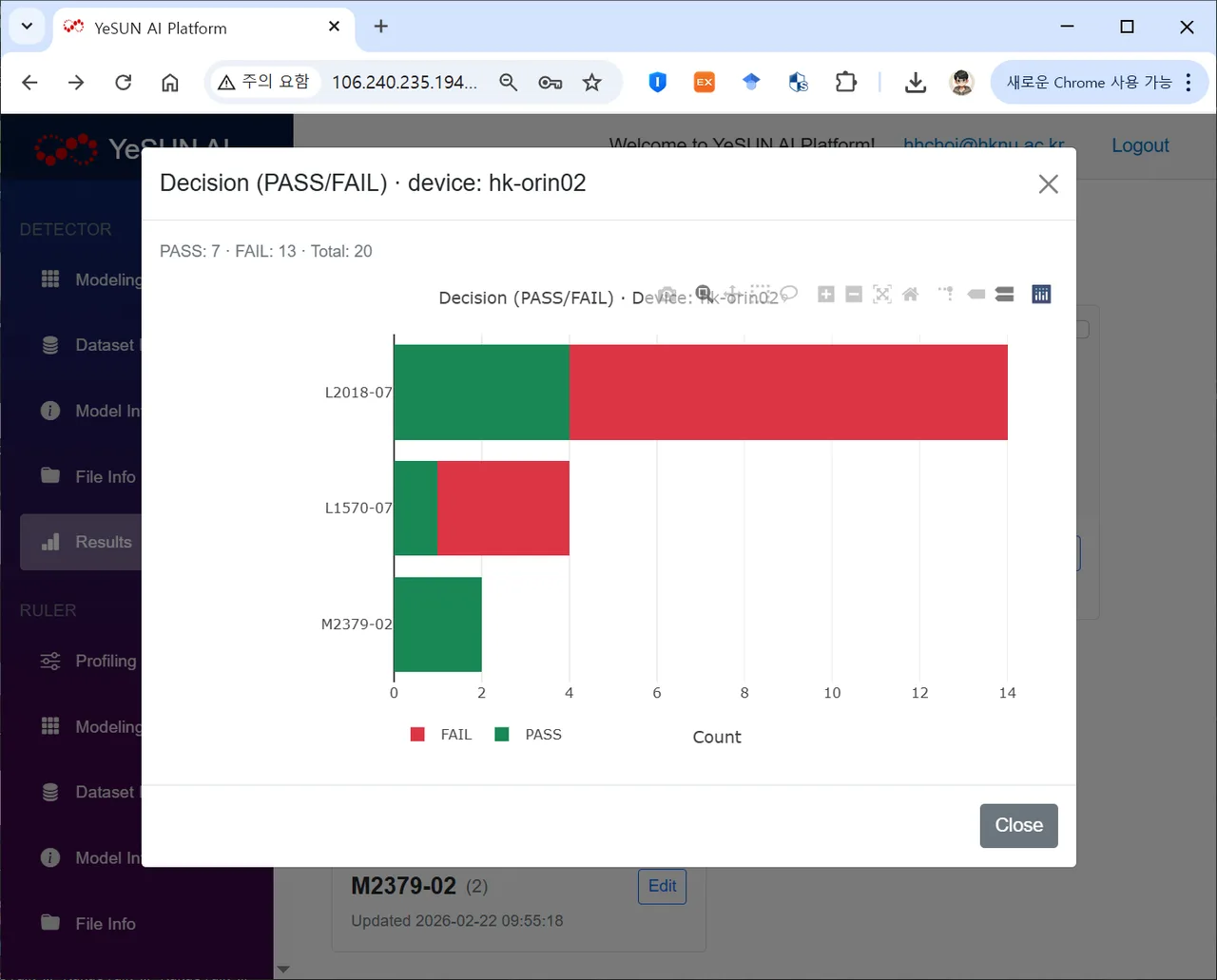
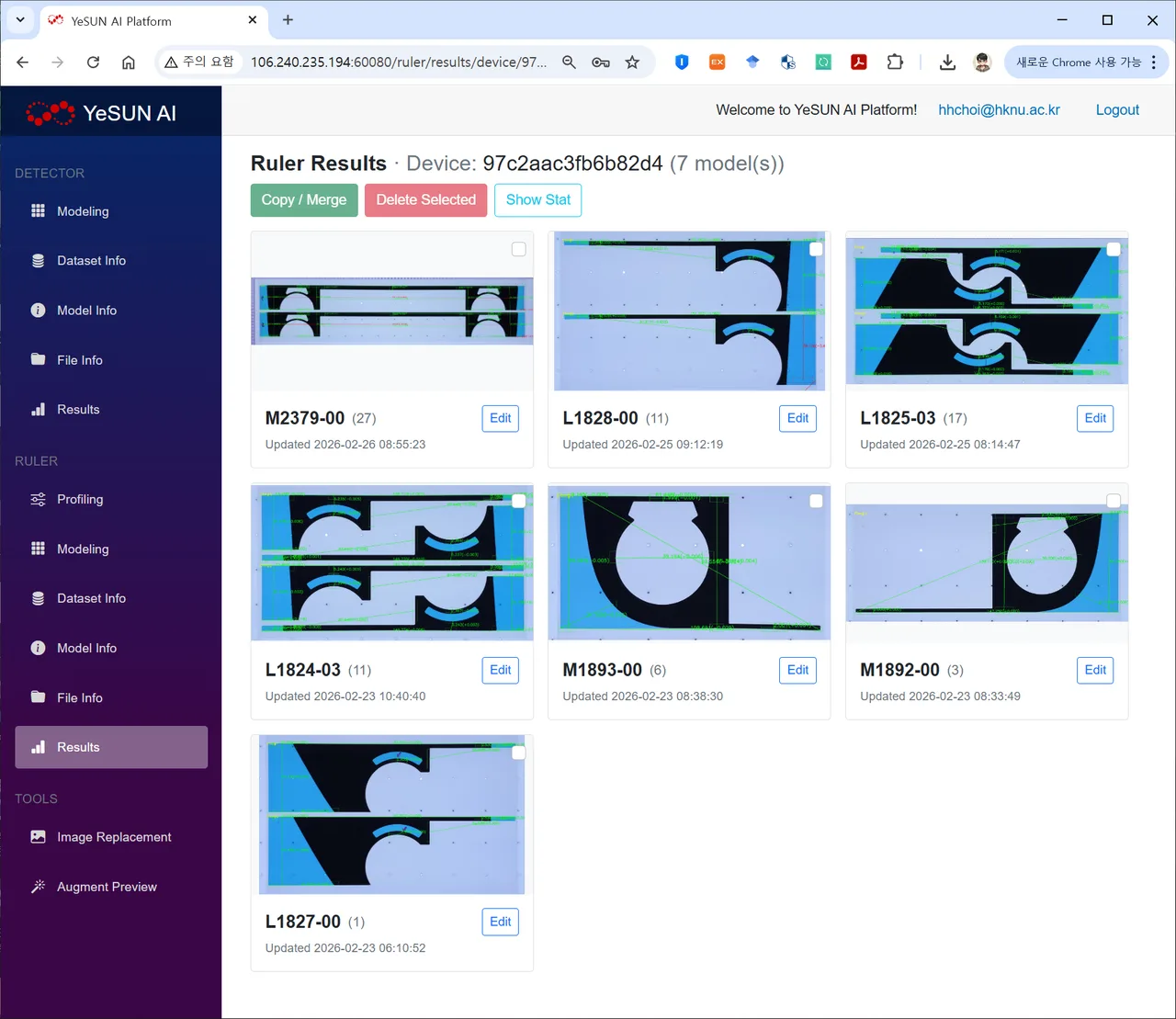
HawkAI console — dashboard, model management, result statistics, image synthesis (1/5)
HawkAI console — dashboard, model management, result statistics, image synthesis (2/5)
HawkAI console — dashboard, model management, result statistics, image synthesis (3/5)
HawkAI console — dashboard, model management, result statistics, image synthesis (4/5)
HawkAI console — dashboard, model management, result statistics, image synthesis (5/5)
MLOPS · HAWKAI

HawkAI — AI model operations platform

From dataset management to training, augmentation, deployment and result statistics, all in one console. Devices fetch new models on their own.

Key features
  • Dataset · label · model version management, with live training progress
  • YOLO training · augmentation · OCR reading split into GPU container services
  • OTA deployment of models · profiles · parameters to inspection devices
  • Pass/fail · measurement statistics, result image lookup · NAS original linkage
BlazorMariaDBSignalRDockerNginxRTX 4090
MLOPS · HAWKAI

HawkAI — AI model operations platform

ARCHITECTURE System architecture — Server (GPU+DB) ↔ Edge Device · Smartphone

HK AI Vision System architecture — Platform / Detector / Ruler integrated
Click to enlarge · edge inspection keeps running even when the network goes down

FEATURES Platform Features

DB management

A single repository for training data, datasets, and model/parameter deployment.

AI Modeling

The full pipeline: labeling → augmentation → Export → training → model generation.

Model profiling

Stores and manages per-film ROI regions and measurement pairs as per-model JSON.

Inference statistics

Real-time aggregation / visualization of Detector pass/fail results and Ruler measurements.

Image Replacement

Synthesizes defect images from normal images to make up for scarce defect data.

Augment Preview

Preview augmentation effects such as rotation, flip, brightness and hue before training.

CORE STACK Four Core Capabilities

Hybrid Edge Computing

Instant inference on an NVIDIA Jetson Orin Nano (40 TOPS) or a smartphone, with training, deployment and statistics on the GPU server. Inspection keeps running even when the network goes down.

  • Jetson Orin Nano
  • RTX 4090 GPU Server
  • Edge Inference
  • OTA model deployment

Computer Vision

YOLO · Faster R-CNN · Anomaly Detection · OpenCV — we choose and train the model architecture to suit the defect types and data volume.

  • YOLO v8/v11
  • Faster R-CNN
  • Anomaly Detection
  • OpenCV
  • Real-Time Inference

Data Engineering / MLOps

The entire pipeline — labeling → augmentation (rotation, flip, brightness) → Export → training → deployment → statistics — runs from a single console.

  • Labeling
  • Augmentation
  • Image Replacement
  • Model Profiling
  • Dataset Mgmt

Web Platform / Real-time

Blazor Server (.NET 8) · MariaDB · WebSocket · MQTT · WebRTC · RTSP · Docker / Kubernetes — full stack developed in-house.

  • .NET Blazor
  • MariaDB
  • SignalR · WebSocket
  • WebRTC · RTSP · MQTT
  • Docker · K8s

INSPECTION FLOW Four Stages of On-Site Inspection

  1. 01
    Product transfer / alignment Conveyor · vision trigger
  2. 02
    AI Vision Inspection Detector / Ruler
  3. 03
    Pass/fail judgment / classification Edge Inference
  4. 04
    History storage / MES integration OPC-UA · DB
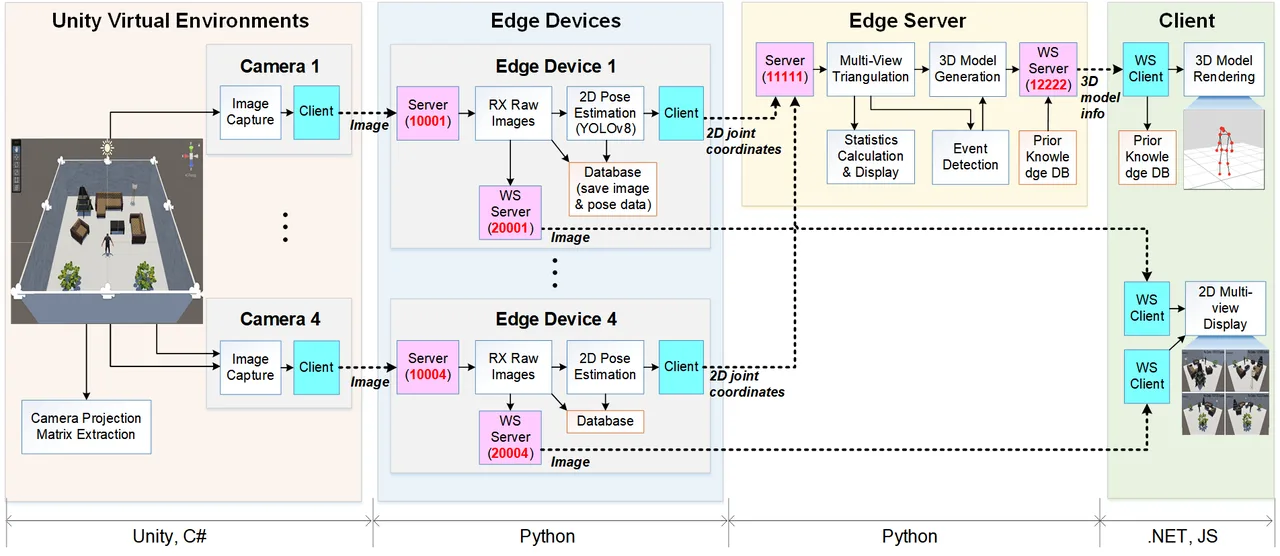
Collaborative inference architecture — virtual environment cameras, edge devices, edge server, client
HYBRID MEC

Hybrid MEC — collaborative inference

Devices, edge servers and the cloud share the computation, cutting latency and power together.

Key features
  • 2D inference on devices, multi-view fusion on the edge server — a 3D pose estimation testbed
  • Smart glasses → smartphone offloading, phone ↔ server hybrid OCR
  • Split · compressed transmission adapted to link conditions; on-site inspection continues even when disconnected
Edge ServerOffloadingSplit InferenceWebRTC
Applied projects
ELUON robot monitoring
Related technology
Semantic Communication
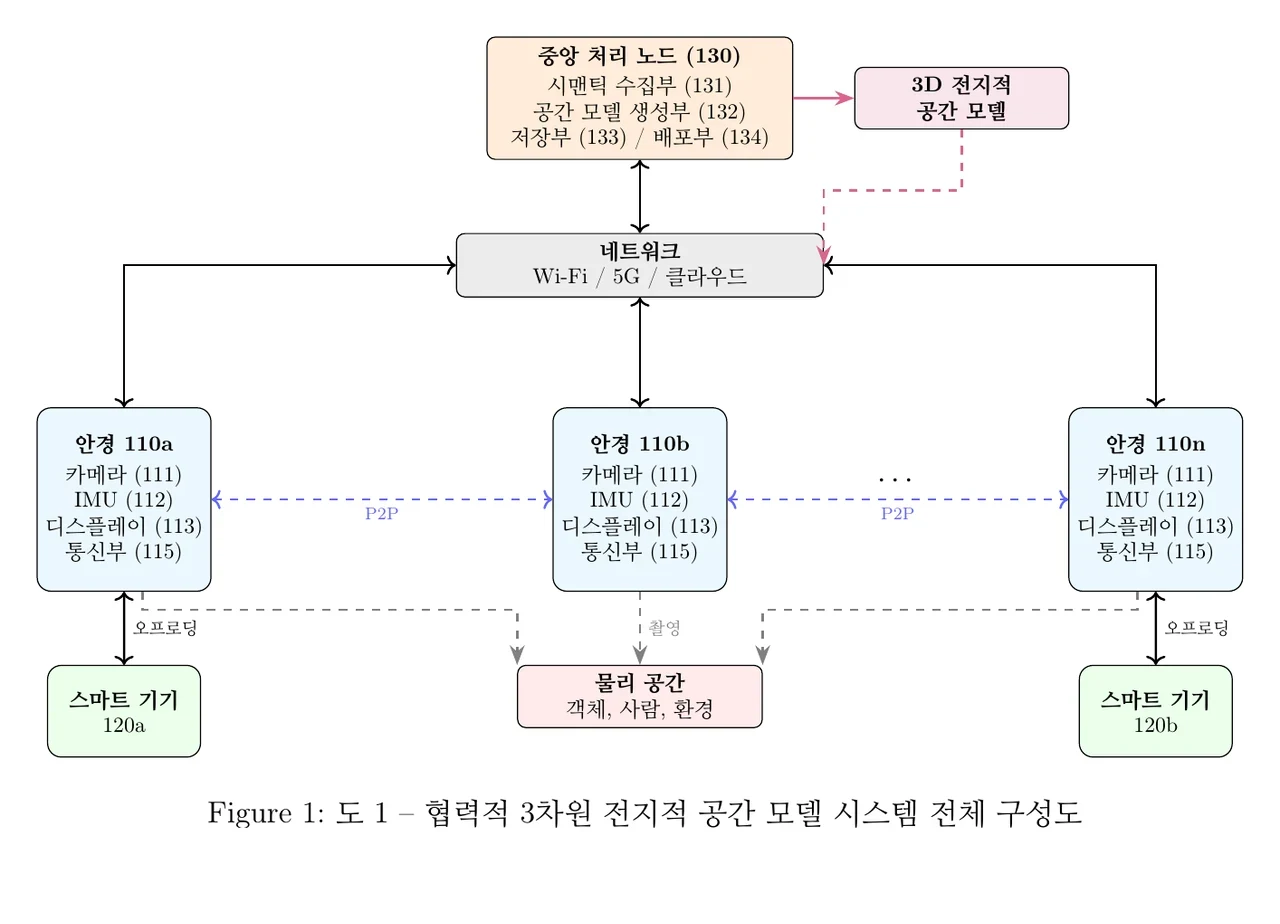
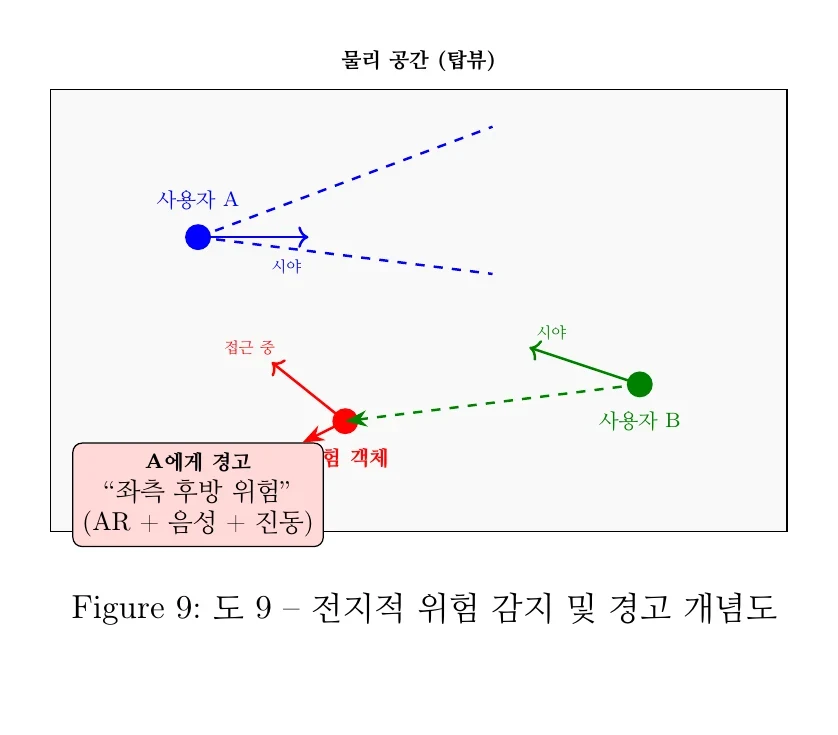
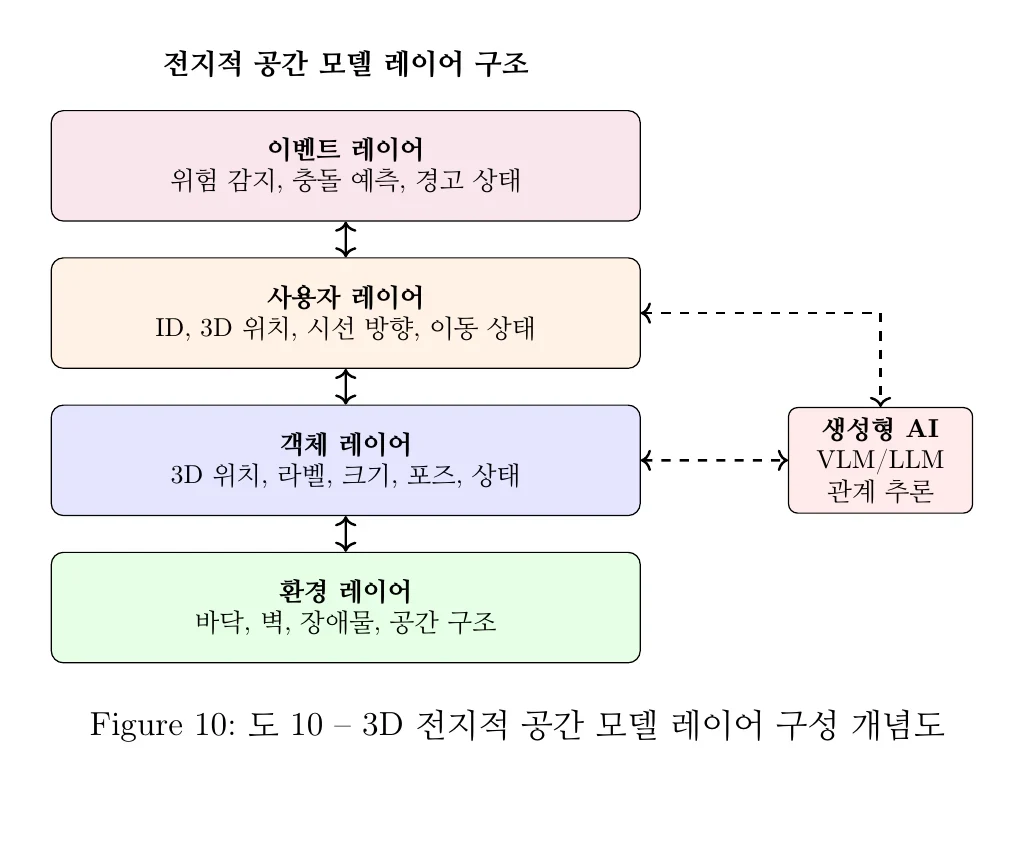
Smart glasses collaboration platform — system architecture, hazard detection concept, spatial model layer structure (1/3)
Smart glasses collaboration platform — system architecture, hazard detection concept, spatial model layer structure (2/3)
Smart glasses collaboration platform — system architecture, hazard detection concept, spatial model layer structure (3/3)
SMART GLASSES PLATFORM

Smart glasses collaboration platform

The views of glasses worn by several people are combined into one spatial model, warning everyone of hazards first.

Key features
  • Semantic information gathered from multiple glasses · multi-view 3D triangulation · consensus
  • Centralized · distributed ad hoc · hybrid architectures, motion tracking (EKF)
  • Hazard detection based on a spatial model · multisensory warnings
Spatial ModelMulti-viewEKFSemantic
Related technology
Smart glasses
Patent applications
10-2026-009452410-2026-0094523
06 / SEMANTIC COMM.

AI semantic communication

We research AI-native wireless network technology that transmits meaning rather than recovering bits exactly.

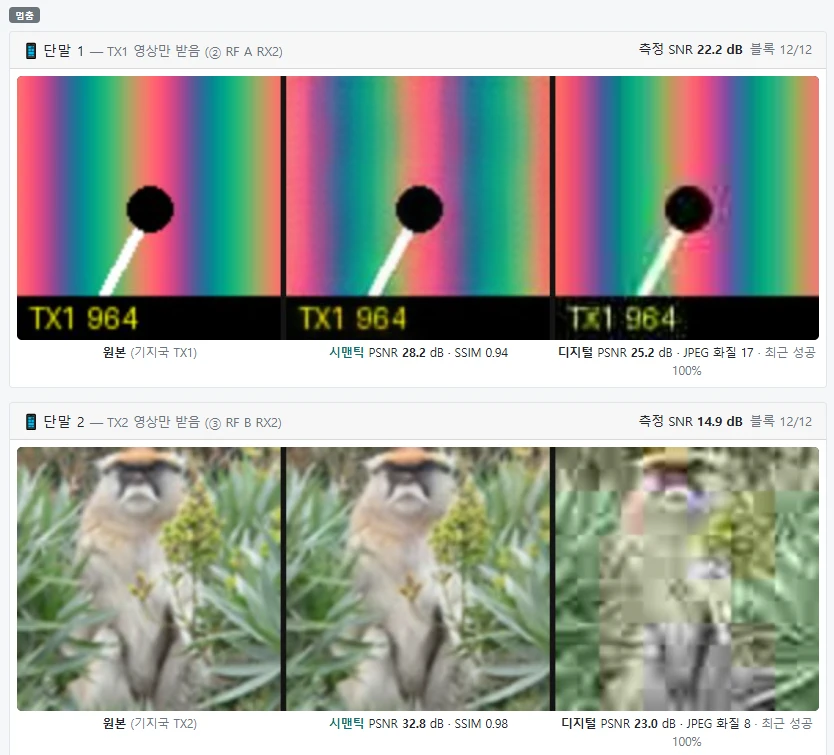
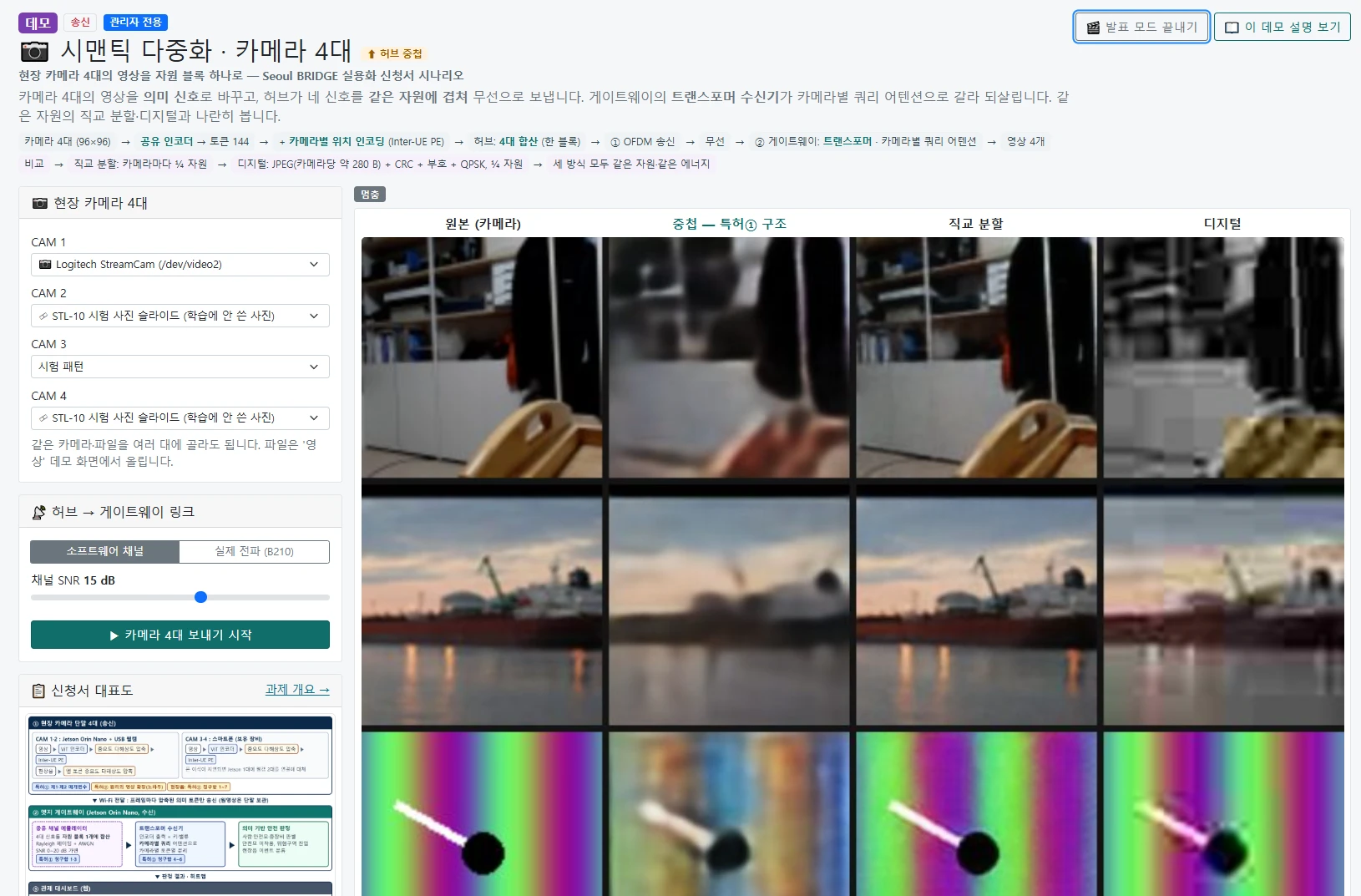
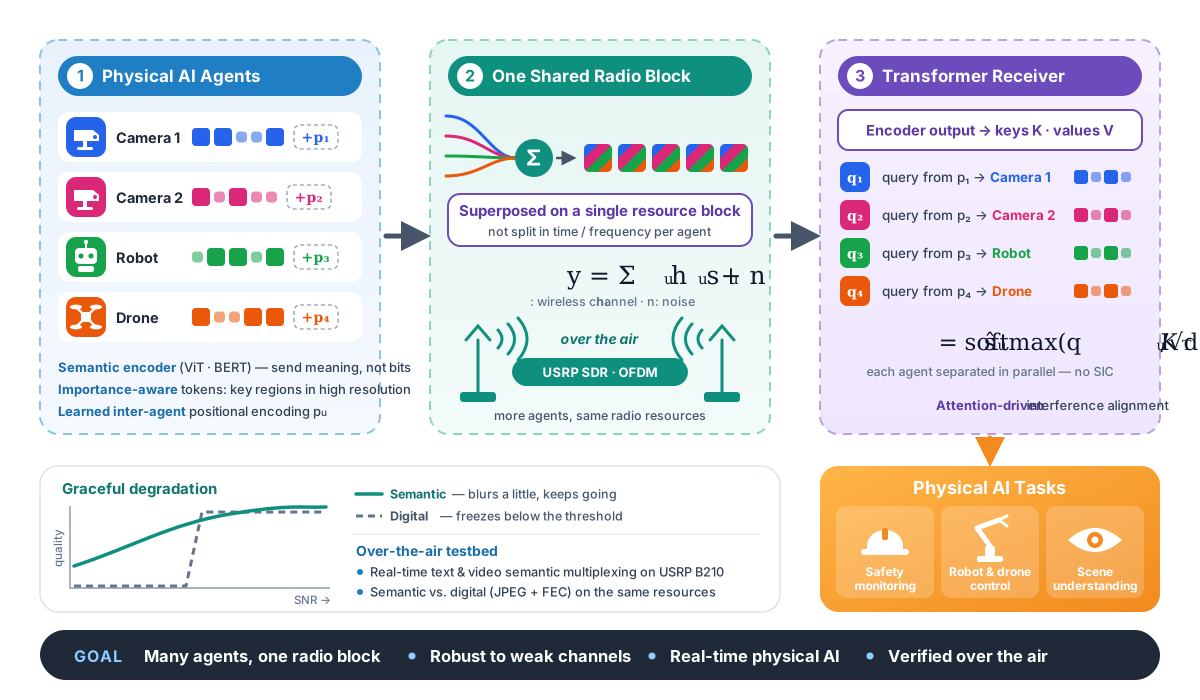
USRP B210 demo — video to two terminals (original · semantic · digital), 4-camera hub superposition, physical AI semantic communication concept (1/3)
USRP B210 demo — video to two terminals (original · semantic · digital), 4-camera hub superposition, physical AI semantic communication concept (2/3)
USRP B210 demo — video to two terminals (original · semantic · digital), 4-camera hub superposition, physical AI semantic communication concept (3/3)
AI-NATIVE · MULTI-USER

Multi-user semantic multiplexing

The semantic embeddings of multiple users are superimposed on one resource block, and the receiver separates them per user while minimizing semantic distortion.

Key features
  • Shared-embedding multiplexing — superimposed transmission with learned masks
  • Per-user attention receiver · signed interference cancellation
  • Meta-learning (MAML) channel adaptation — instant adaptation from little data
  • 10× lower error rate · 14× lighter receiver · adaptation gain over 30%
AI-NativeSemantic Comm.TransformerMAMLIEEE JSAC · TVT
Patent applications
10-2026-008793210-2026-0087933
AI-NATIVE · MULTI-USER

Multi-user semantic multiplexing

PARADIGM From bit recovery to meaning preservation

The semantic embeddings of multiple users are superimposed on a single shared resource block, and the receiver separates them per user while minimizing semantic distortion. This fundamentally improves resource efficiency over orthogonal allocation, which gives each user a separate resource.

  1. 01Shared-embedding multiplexingUser embeddings projected into a shared space and superimposed with learned masks
  2. 02Per-user attention receiverSemantic demultiplexing with user-wise attention and a lightweight receiver structure
  3. 03Signed interference cancellationGram-matrix-based combining weights cancel correlated interference
  4. 04Meta-learning channel adaptationMAML — adapts instantly to channel changes with little data and only a few updates

RESULTS Results

Error rate improvement10×
Lightweight receiver14×
Adaptation gain30%+
Validation dataBERT · MNIST

On pilot-aging channels the error rate is more than an order of magnitude lower than a conventional digital chain, and receiver parameters are reduced by up to 14× at equal performance. Task-conditioned meta-learning adaptation cuts the error rate by more than another 30%.

PAPERS Key papers

  • Transformer-Based Shared Embedding for Multiple Access in Semantic Communications — IEEE JSAC, 2026
  • Attention-Driven Interference Alignment for Multi-User Semantic Communications — IEEE TVT, 2026
  • Attention-Driven Semantic Transmission Scheme for AI-Native Wireless Communications — IEEE Communications Letters, 2025

VISION Edge AI × Semantic Communications

An AIoT edge-intelligence platform that transmits the semantic information gathered by vision AI edge devices over AI semantic communication — a full-stack link from cameras on the inspection floor to next-generation wireless networks.

IP / PATENTS

Patent applications

Vision inspection · dimensional measurement · smart glasses · environmental monitoring · semantic communication — 7 applications filed.

  1. Filed 10-2026-0096389 2026.05.28
    Method and system for environment monitoring and control based on multimodal artificial intelligence

    이창민, 씨엠인싸이트 주식회사, 에이치케이랩 주식회사, 강경훈

  2. Filed 10-2026-0094523 2026.05.26

    Method and system for object detection and augmented reality overlay based on smart glasses

    최현호

  3. Filed 10-2026-0094524 2026.05.26

    Method and system for generating a collaborative omniscient spatial model using multiple smart glasses

    최현호

  4. Filed 10-2026-0087932 2026.05.15

    Apparatus and method for multi-user semantic multiplexing based on extended shared embeddings, and wireless communication system using the same

    이정륜, 이기호, 최현호

  5. Filed 10-2026-0087933 2026.05.15

    System and method for multi-access transmission and reception with embedding division based on multimodal semantic relevance

    이정륜, 이기호, 최현호

  6. Filed 10-2026-0082439 2026.05.07

    Method and system for AI vision-based dimension measurement using a smart device's camera

    이창민, 최현호

  7. Filed 10-2026-0081586 2026.05.06

    Adaptive vision inspection system and method using a smart device

    이창민, 최현호

Wondering which technology fits your site?
Talk it through one-on-one with HK Lab.

Technical consultation
An unexpected error occurred. Reload 🗙
Lost connection to the server. Reconnecting…